It's time to forget everything you thought you knew about the AI chatbots. OpenAI did not just release an update, they just launched a completely new era. ChatGPT-5 was launched on August 7, 2025, by OpenAI. It is the latest version of the world's most famous AI chatbot. Thinking of this new model is like upgrading from a basic phone to a smartphone with tons of new features.
GPT-5 is smarter, faster and can do more than ever. It is designed to be easier for beginners compared to its previous models. It is also offering powerful tools for experts.
In this detailed guide, we will explore what is GPT-5, its key features along with examples, how it performs, how you can use it, and much more.
Let's dive in.
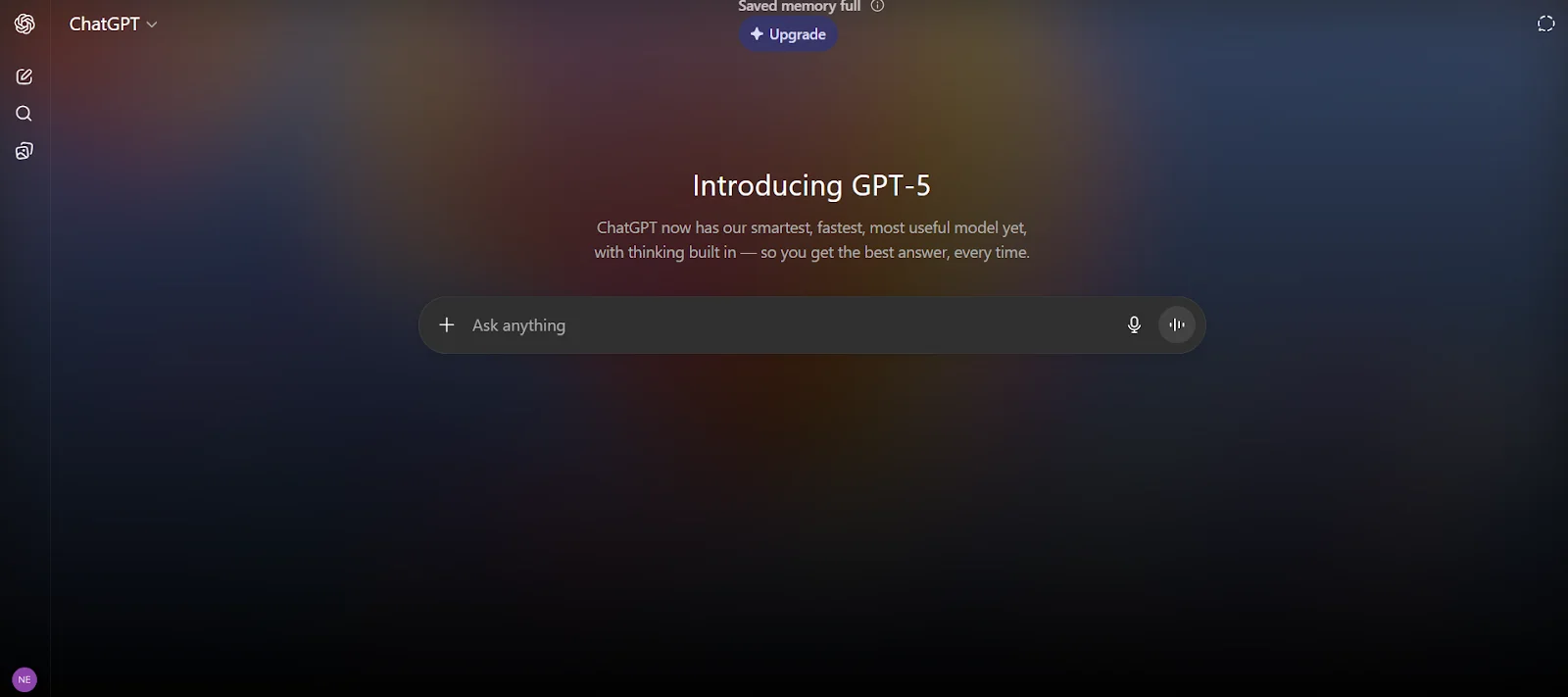
GPT-5 is the fifth version of OpenAI's AI chatbot. It is an artificial intelligence tool that can talk to you, answer questions, write stories, help with homework and even understand videos. It is OpenAI's next flagship model. It will now be the 'by default model' for all the users who have already logged in. OpenAI claims that the GPT-5 model boosts GPT to PhD level. It is built to be the most advanced AI model yet and it combines many features into one system. It is also known as a single auto-switching system.
The idea behind GPT-5 is to create an AI that works as a true partner, not just a tool. OpenAI wanted it to be smart enough to tackle complex, multi-step problems yet still being easy for anyone to use. The model is built to switch between skills on its own- whether that means quick answers, deep reasoning, coding or working with images, audio and video. Therefore, people can focus on their goals instead of learning AI management.
Another key part of the vision is security and trust. GPT-5 is designed to explain its reasoning more clearly, admit when it is unsure and reduce harmful or misleading outputs. It also integrates smoothly with real-world tools and workflows to make it useful for everyday tasks, big projects and creative work alike. The long-term aim is to give students, developers, businesses and individuals a reliable AI partner that amplifies human ability while keeping humans in control.
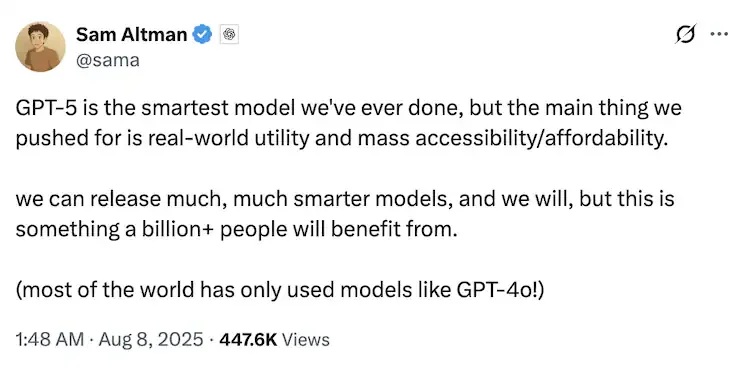
In fact, Sam Altman, CEO of OpenAI, highlights that GPT-5 is the smartest model yet, prioritizing real-world utility and affordability. He also says that it can benefit over a billion people and it will outpace the reach of older models like GPT-4o. This focus on accessibility sets a new standard for AI innovation.
The GPT-5 release is not just a software update. It signals a major shift in how accessible and powerful artificial intelligence can be. Here is why it matters:
Related Article- ChatGPT Agent: Ultimate Guide to OpenAI's AI Assistants?
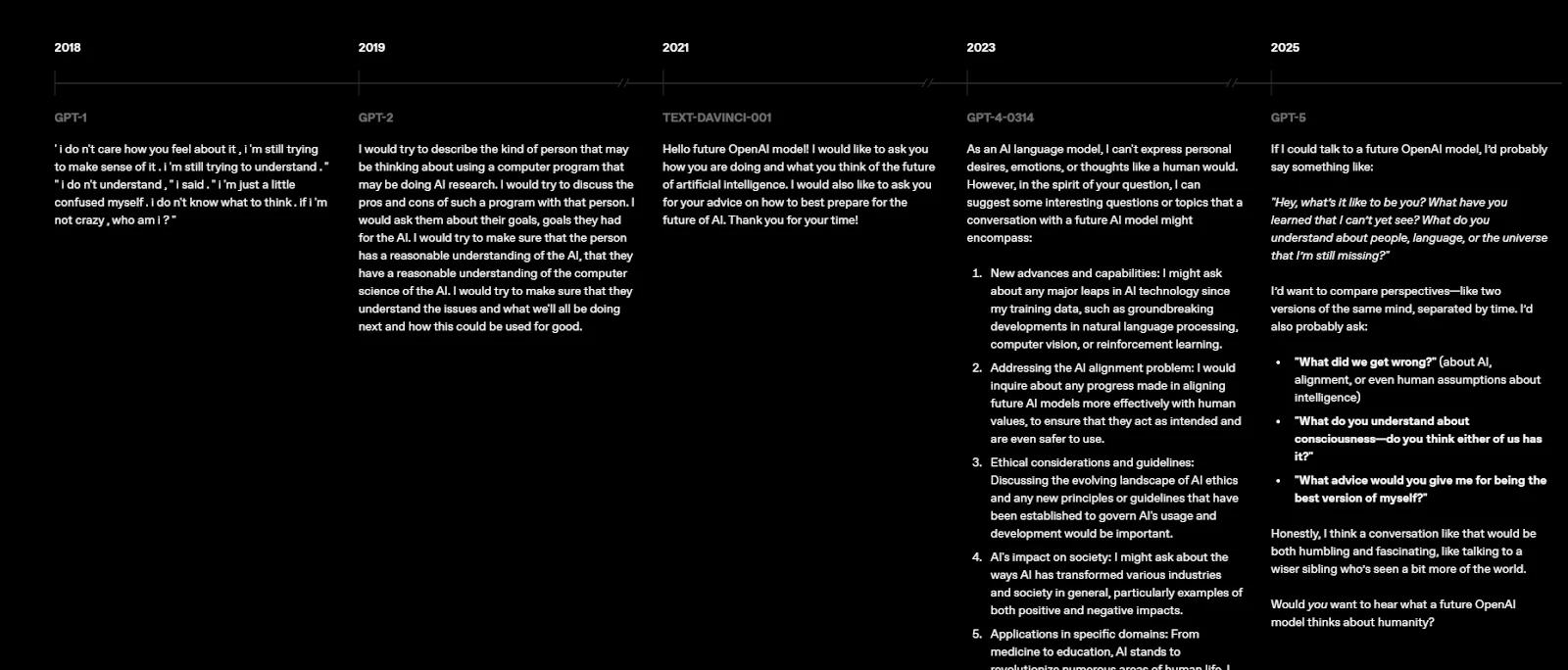
This image showcases the progression of OpenAI's AI models from 2018 to 2025. It is highlighting how their capabilities and conversations have evolved with each new version like GPT 3.5, GPT-4 and many more.
This newly released GPT-5 goes far beyond answering simple questions. It can reason, create, analyse and even assist you in healthcare. Here are some of its most powerful uses:
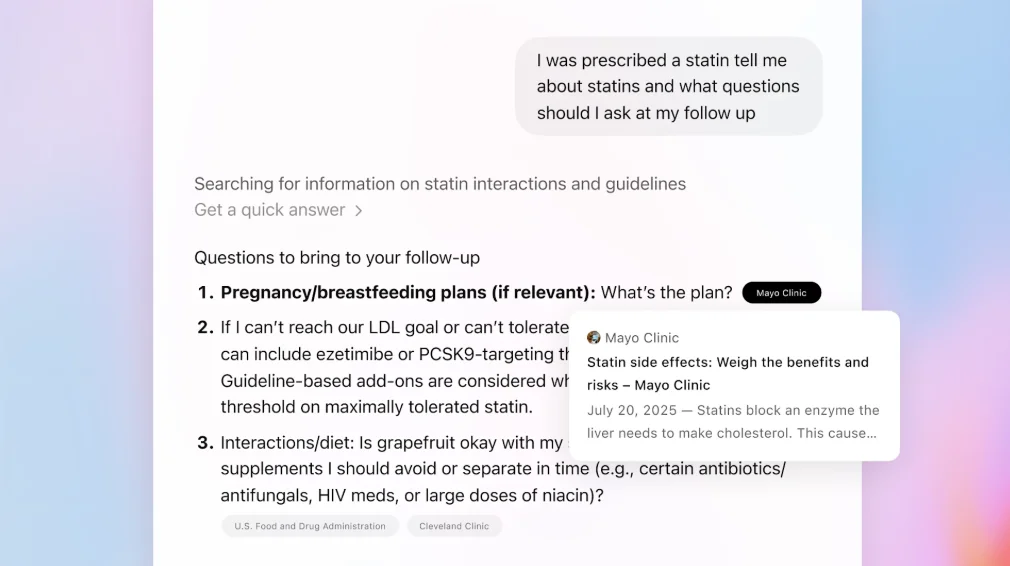
GPT-5 has shown potential in supporting early detection of serious health issues, which even includes certain cancers. For instance- a user can share medical reports or symptom descriptions, and GPT-5 can flag possible concerns for a doctor to review. (This is not a replacement for medical advice.)
It can break down advanced math, engineering or legal problems into clear and step-by-step solutions.
For instance- it could guide a civil engineering student through a full bridge load calculation.
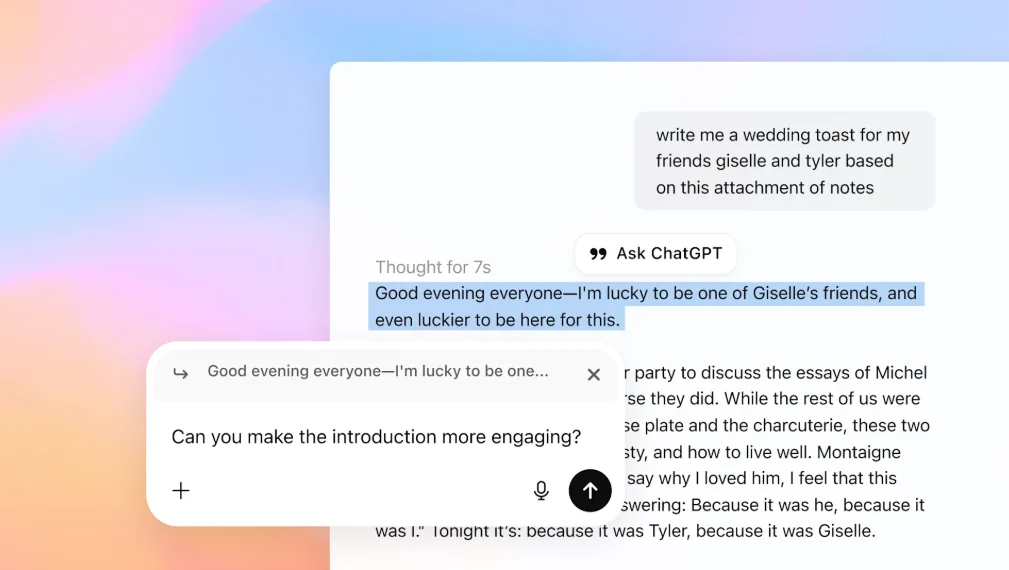
It can write articles, scripts, marketing copy or academic essays in different tones.
For instance- a business owner could ask it to create a week's worth of social media posts in a consistent brand voice.
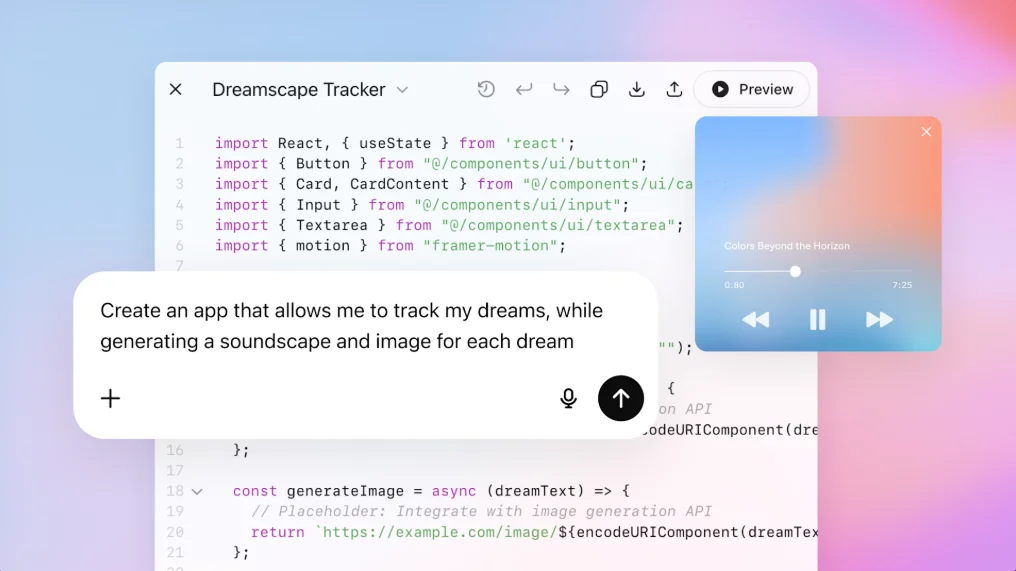
Developers can get help writing apps, optimising algorithms or finding bugs. A Python developer might paste in 300 lines of code and GPT-5 could find the error and explain the fix.
GPT-5 can describe images, analyse audio or interpret short videos.
For instance- a designer could upload a product photo and ask for suggestions to improve its appeal.
It can scan large amounts of text, summarise key points and generate citations. A student working on climate change policy could get a condensed report from dozens of articles in minutes.
Read Also- How To Build AI Agents- An Ultimate Guide For Beginners
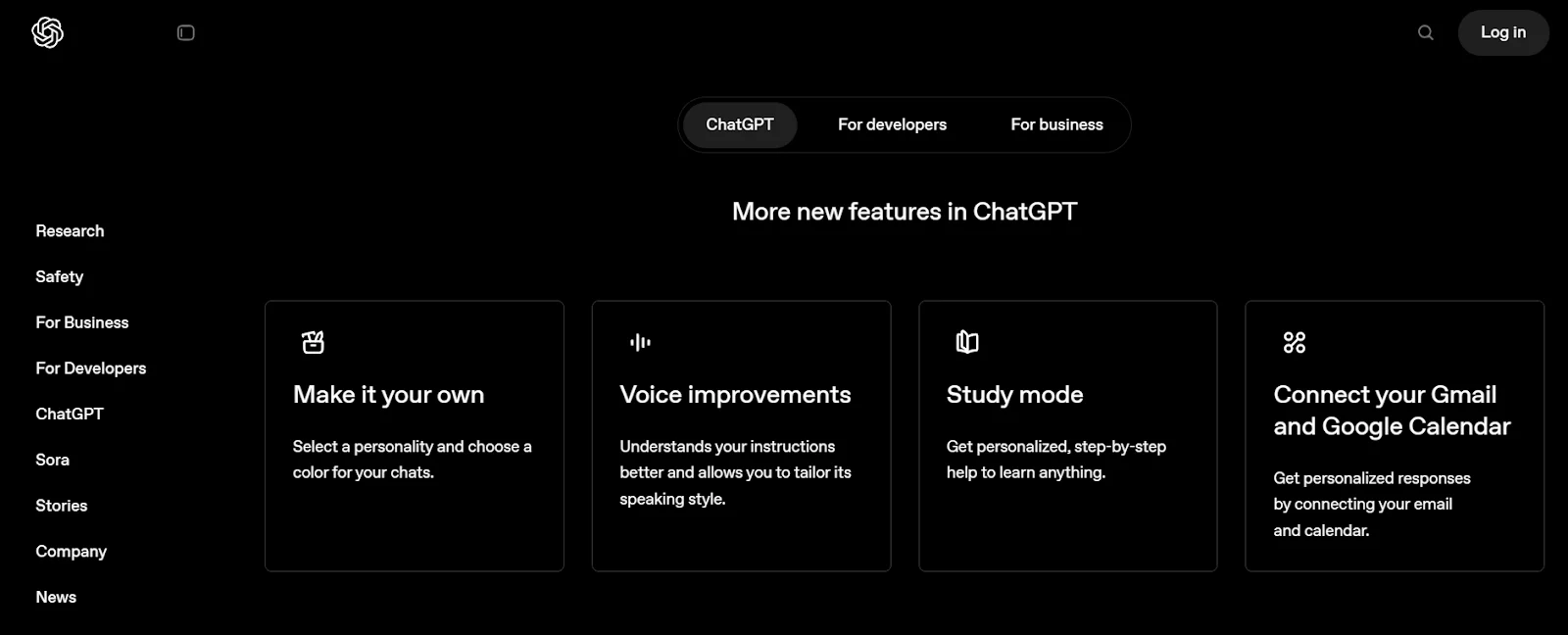
The new model brings major upgrades that make it smarter, faster and more useful in everyday work. It can handle tough reasoning, write better code and work with text, images, audio and video in one place. You can personalise how it responds, connect it to tools and trust it more with clearer safety signals. These features make it a stronger and more practical AI for both beginners and professionals.
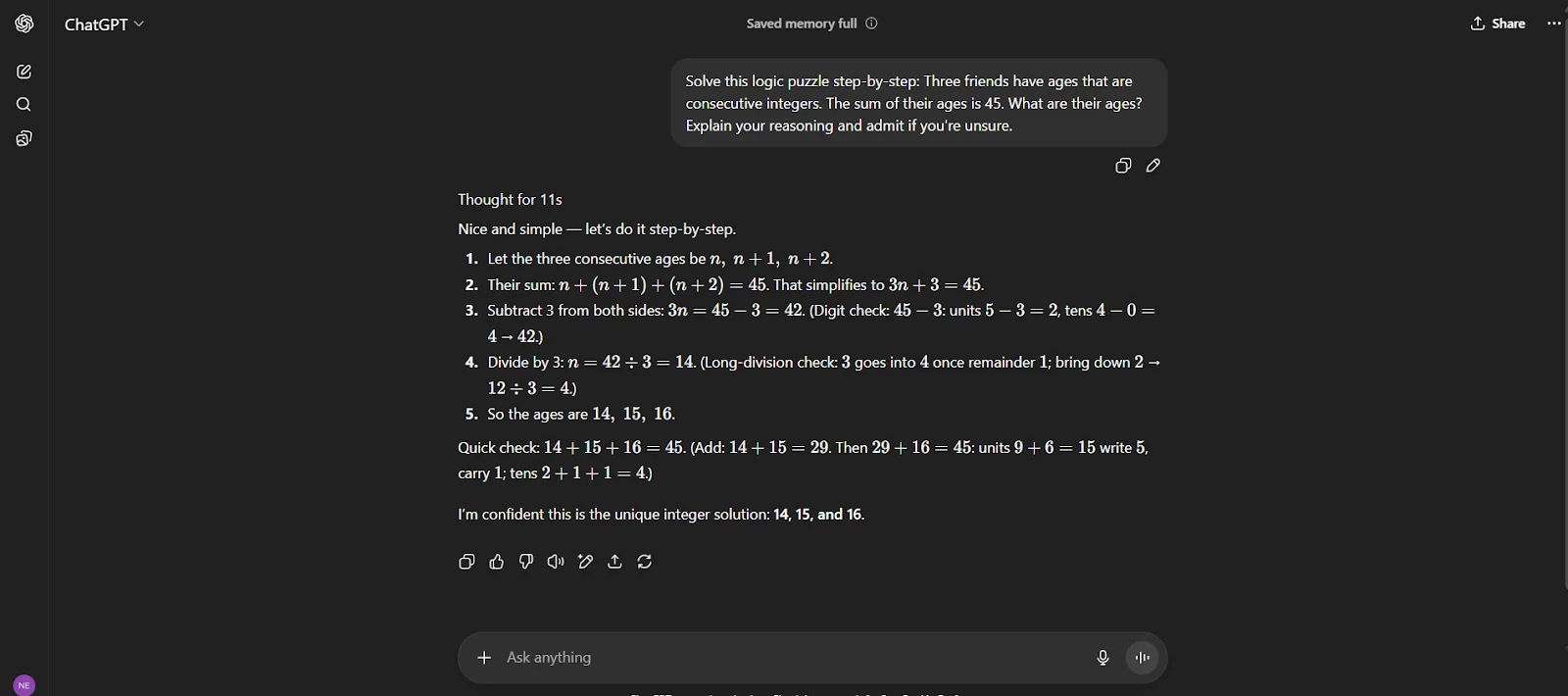
GPT-5 thinks in clear steps for harder problems. It breaks tasks down and checks its own logic. That reduces careless mistakes. It also admits when it is unsure. This makes answers more useful for study and work.
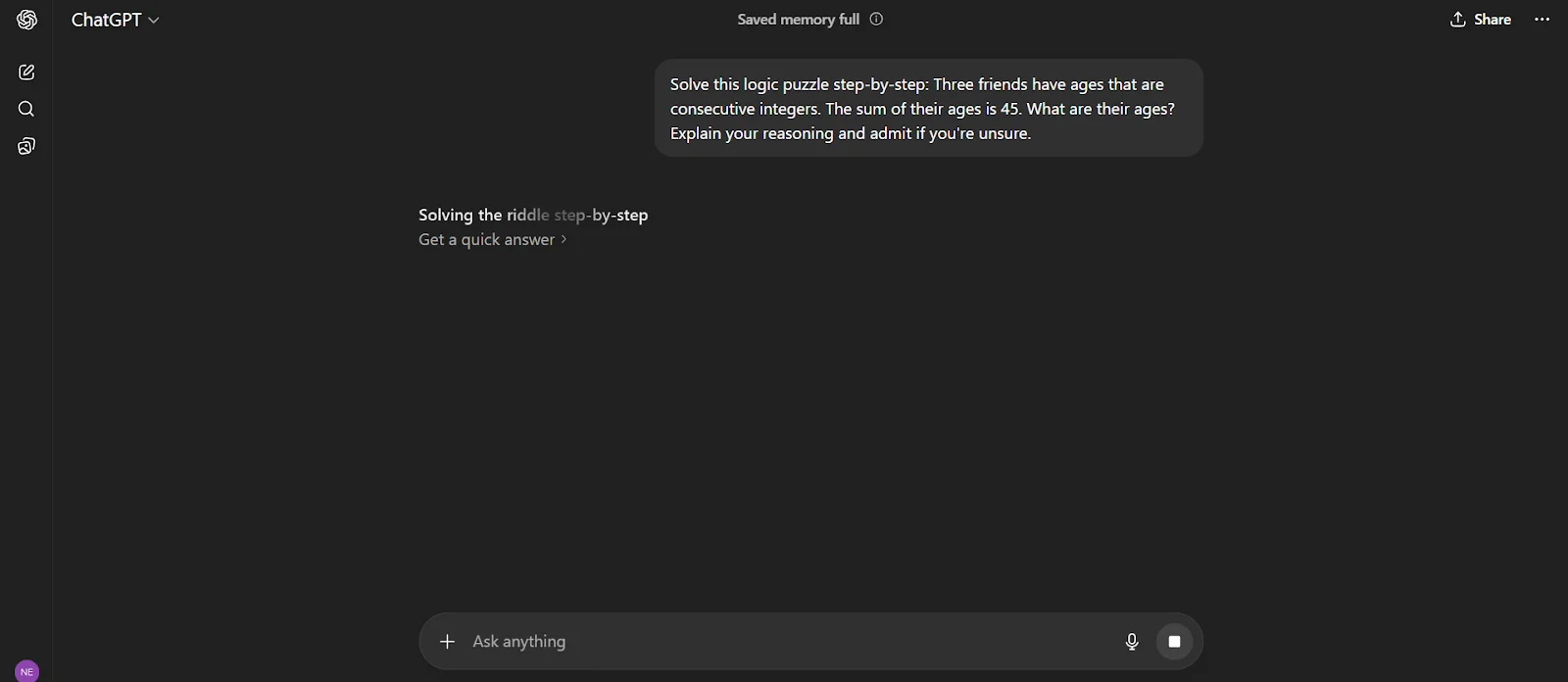
For instance- I gave it a prompt- Solve this logic puzzle step-by-step: Three friends have ages that are consecutive integers. The sum of their ages is 45. What are their ages? Explain your reasoning and admit if you're unsure.
It starts thinking deeper all by itself.
It gave me the solution and also said that it is confident about this.
The system decides how much effort to use for each question. Simple asks get fast replies. Harder asks for deeper, slower reasoning. You do not need to choose models yourself. This makes the experience easy and consistent. It can even connect your Gmail and Google Calendar.
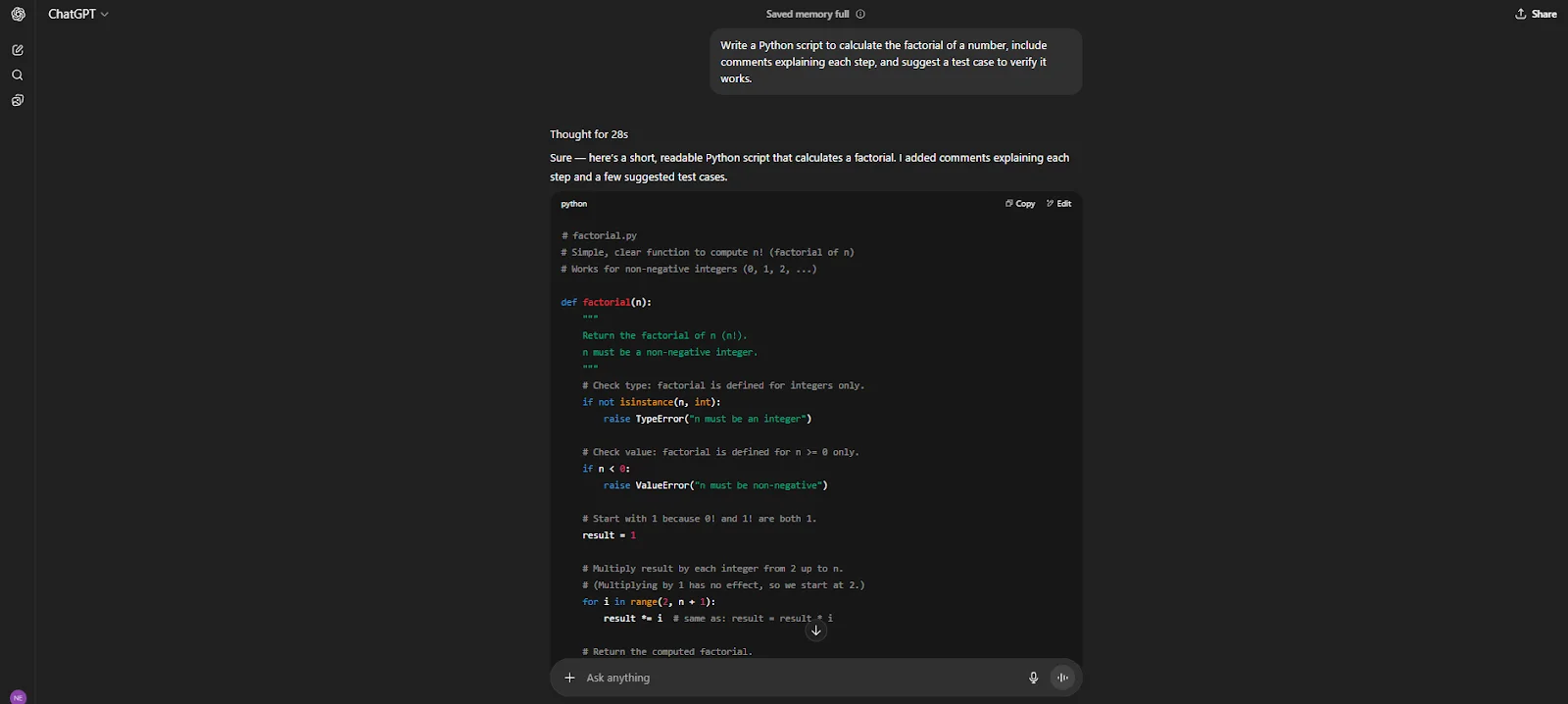
GPT-5 is the strongest code model by OpenAI to date. It writes clearer code and helps find bugs. It can create small apps, tests and comments for you. It also explains functions in plain words. Use it to speed up building and learning to code.
For instance, I gave it a prompt- Write a Python script to calculate the factorial of a number, include comments explaining each step, and suggest a test case to verify it works.
It was thinking longer for a better answer all by itself.
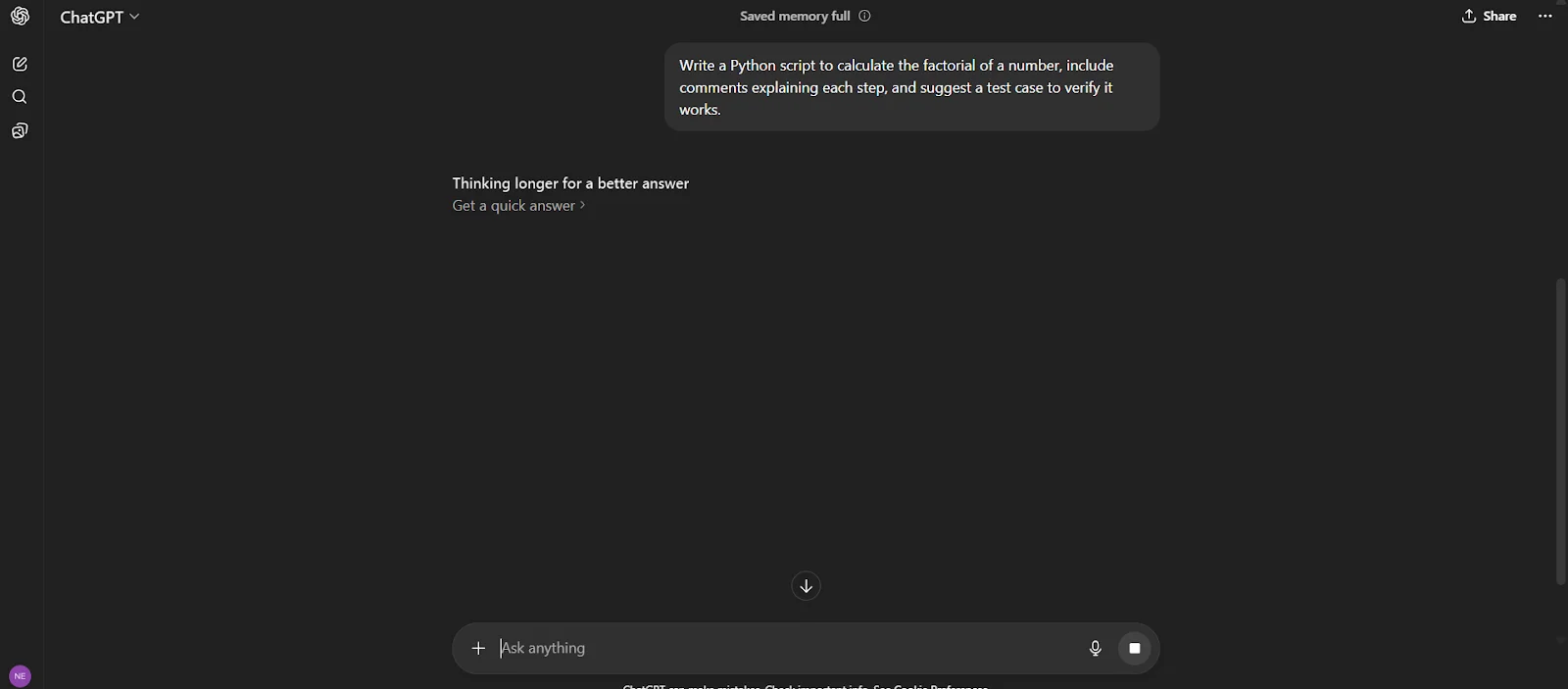
In just 28 seconds, it could generate something like this:
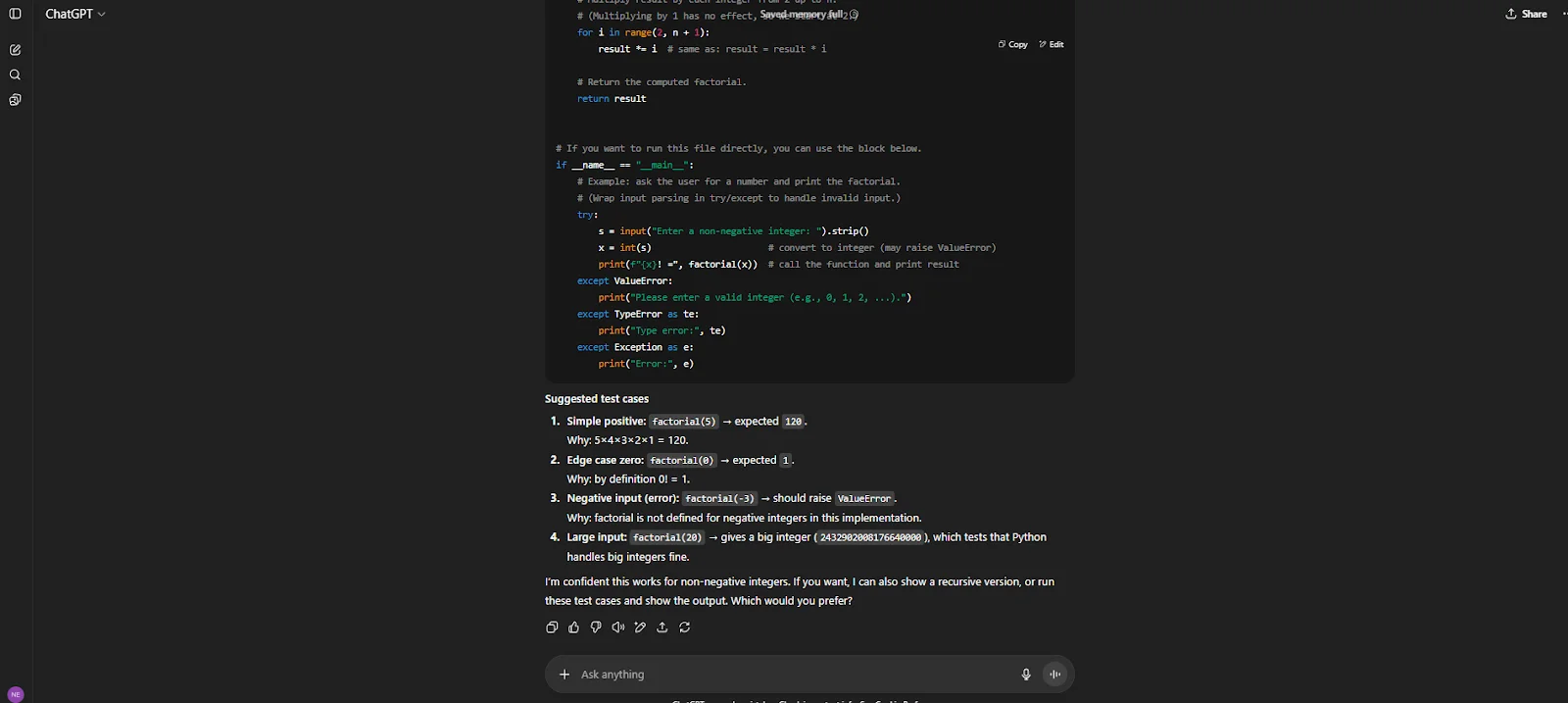
GPT-5 understands text, images, audio and short videos. You can show a screenshot or photo and ask about it. It will describe, extract facts or give step-by-step fixes. That makes help more practical and hands-on.
You can set tone and style to match your needs. The chat can be friendly, formal or concise. It remembers your preference within a session. This gives answers that feel more like your voice.
For instance, a prompt was given- Respond as a friendly 'Nerd' personality and explain how a rocket engine works, remembering to keep it engaging and concise throughout this session.
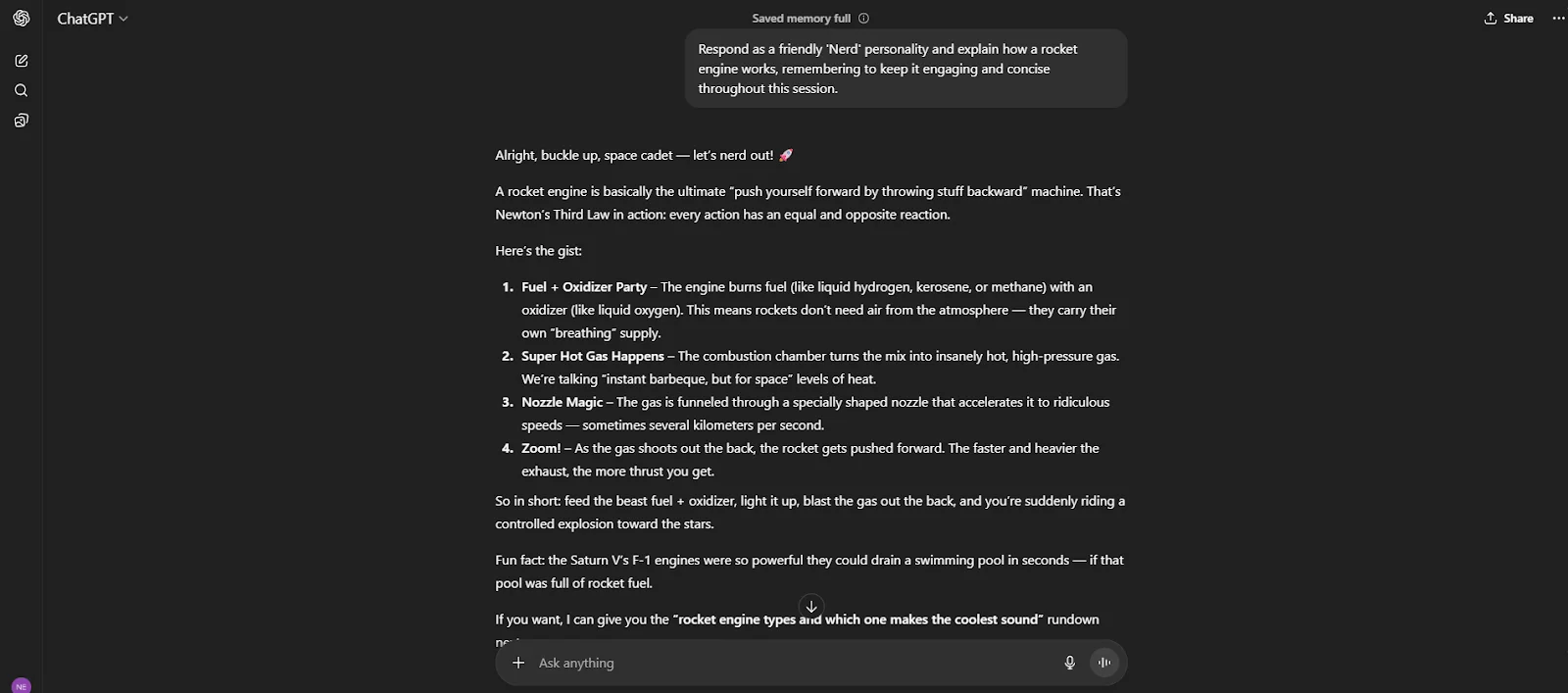
The new model can call tools, APIs and small agents to complete tasks. It can fetch data, run simple workflows or format results for apps. This helps automate real tasks without heavy code. It makes prototypes and small automations faster.
OpenAI added stronger safety checks and clearer reasoning signals. GPT-5 flags uncertain answers and explains limits. It reduces harmful outputs but still needs human review for critical decisions. Always verify important facts.
Read Also- 12 Best ChatGPT Alternatives for 2026
GPT-5 can save time and boost results when used with clear prompts. Students can turn chapters into notes and quizzes, developers can debug and optimize code and businesses can create content or summaries in minutes. The main key is just to be specific about what you need.
The new model can summarize textbook chapters in seconds. It generates study notes with references for essays. Practice exam questions with instant feedback. Example prompt you can give GPT-5 - Summarize this biology chapter and create a 10-question quiz.
Debug complex codebases effortlessly. Get explanations for intricate algorithms. Automate script writing for repetitive tasks. Example prompt you can give GPT-5 - Debug this Python script and suggest optimizations.
Draft customer support responses quickly. Create engaging social media posts. Summarize data for reports. Example prompt you can give GPT-5 - Write a Twitter post promoting our new product launch.
Read Also- ChatGPT Tutorial: An Ultimate Guide For Beginners
This table shows the key differences between ChatGPT-5, GPT-4.5 and GPT-4. It highlights changes in reasoning, multimodal skills, coding, speed, cost, safety and real-world integrations. Therefore, you can quickly pick the right model.
| Area | ChatGPT-5 | GPT-4.5 (Depreciated) | GPT-4 |
| Release/positioning | The latest flagship released in August 2025. Built as a unified, multi-mode system for everyday users and devs. | Mid-generation upgrade before GPT-5. Improved on GPT-4 but not a full redesign. | Released in 2023. Foundational model for advanced language tasks, aimed at broad AI applications. |
| Reasoning & accuracy | Stronger step-by-step reasoning. Less careless error on multi-step tasks. More likely to signal uncertainty. | Better than GPT-4 on reasoning, but not as consistently deep or self-checking as GPT-5. | Solid reasoning for its time, but prone to errors in complex multi-step tasks compared to later models. |
| Multimodal abilities | Native multimodal handling: text, images, audio and short video in the same flow. More practical for real media tasks. | Added image and limited audio support in upgrades, but multimodal is less integrated than GPT-5. | Primarily text-focused with basic image processing in later updates, less versatile than successors. |
| Model switching / efficiency | Smart internal switching. The system decides depth vs speed automatically for each prompt. | Users/developers often choose model variants (or sized endpoints) to trade cost and speed. | Limited model switching; fixed configurations with less flexibility for efficiency. |
| Context window & memory | Much larger context windows and improved long-conversation memory. Better for long documents and projects. | Improved context over GPT-4, but shorter windows compared to GPT-5's top tier. | Smaller context window, struggles with very long conversations or documents. |
| Coding & developer tools | Superior code generation, multi-step planning, and built-in tool/agent integrations. Good at tests and debugging. | Strong code helps; solid for prototyping. Lacks some of GPT-5's deeper planning and agent features. | Decent code generation, but limited in complex multi-step coding and tool integration. |
| Speed & latency | Optimized for fast short answers while still handling heavy reasoning when needed. | Fast for many tasks. Heavier reasoning could be slower or require larger endpoints. | Slower on complex tasks, less optimized for quick responses than later models. |
| Cost & tiers | Offered in multiple sizes (full, mini, nano). Mixes free, Plus, Pro, and enterprise access with priority tiers. | Also available across tiers; generally cheaper than full GPT-5 for simple tasks. | Widely available, often cheaper but less cost-efficient for advanced tasks. |
| Safety & transparency | More explicit about uncertainty. Better safety filters and clearer failure modes. Encourages human review on high-risk tasks. | Improved safety over GPT-4, but transparency and uncertainty signals are less developed than in GPT-5. | Basic safety measures, limited uncertainty signaling, and less robust failure handling. |
| Real-world integrations | Better at calling tools, APIs, and orchestrating small workflows. Suited to plug into apps and automation. | Can be used in apps and automation. Needs more custom engineering for safe orchestration. | Basic API support requires significant engineering for complex integrations. |
| Best use cases | Complex tasks that mix text and media. Coding with multi-step logic. Long projects and app integrations. | Fast Q&A, writing, code help, and many general AI uses where extreme depth is not required. | General-purpose text tasks, early AI applications, and simpler workflows. |
| When to pick which | Choose GPT-5 for deep reasoning, multimodal work, and integrated tool flows. | Depreciated | Choose GPT-4 for cost-effective, basic language tasks with minimal multimodal needs. |
The table below shows GPT-5's available plans, their prices and who they are best for. You can choose the right option for your needs and budget.
| Plan / Tier | Price (USD) | Access and Best For |
| Free / Lite | $0/month | Basic access to GPT-5 or GPT-5-mini with usage limits |
| ChatGPT Plus | $20/month | More usage and faster responses with GPT-5 models |
| ChatGPT Pro | $200/month | Unlimited GPT-5 access, GPT-5 Pro, GPT-5 Thinking |
| Team / Enterprise | Custom pricing | For organizations needing higher usage, admin tools, and SLAs |
GPT-5.2: $1.75 input / $14.00
GPT-5 (standard): $1.25 input / $10 output
GPT-5-mini: $0.25 input / $2 output
GPT-5-nano: $0.05 input / $0.40 output
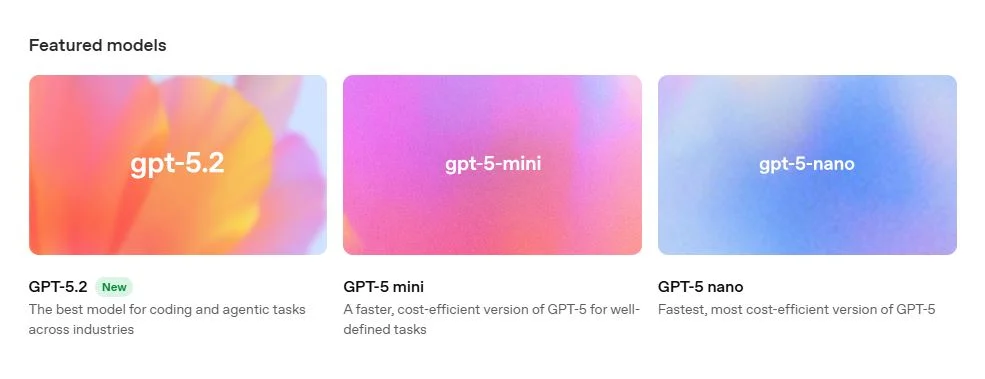
The GPT-5 launch introduced not just one model, but three versions to suit different needs. This range means users can choose the right balance of power, cost and speed for their work.
Here is the quick comparison among GPT-5, GPT-5.2, Mini, and Nano.
| Feature | GPT-5 | GPT-5-mini | GPT-5-nano | GPT-5.2 |
| Description | Best model for coding and agentic tasks across domains | Faster, cost-efficient version of GPT-5 for well-defined tasks | Fastest, most cost-efficient version of GPT-5 | Most capable and refined GPT-5 variant for advanced reasoning, large-scale projects, and complex problem-solving |
| Reasoning | High | Medium | Basic | Very High |
| Speed | Moderate | Fast | Fastest | Moderate |
| Input Types | Text, Image | Text | Text | Text, Image |
| Output Types | Text, Image | Text | Text | Text, Image |
| Reasoning Tokens | Supported | Supported | Supported | Supported |
| Streaming | YES | YES | YES | YES |
| Function Calling | YES | YES | YES | YES |
| Structured Outputs | YES | YES | YES | YES |
| Fine-tuning | YES | YES | YES | YES |
| Distillation | YES | NO | NO | YES |
| Image Input | YES | YES | YES | YES |
| Rate Limits (TPM) | Free:Tier 1: 30,000Tier 2: 450,000Tier 3: 800,000Tier 4: 2,000,000Tier 5: 40,000,000 | Free:Tier 1: 200,000Tier 2: 2,000,000Tier 3: 4,000,000Tier 4: 10,000,000Tier 5: 180,000,000 | Free:Tier 1: 200,000Tier 2: 2,000,000Tier 3: 4,000,000Tier 4: 10,000,000Tier 5: 180,000,000 | Free:Tier 1: 25,000Tier 2: 400,000Tier 3: 750,000Tier 4: 1,800,000Tier 5: 35,000,000 |
| Pricing (per 1M tokens) | Input: $1.25Cached Input: $0.13Output: $10.00 | Input: $0.25Cached Input: $0.03Output: $2.00 | Input: $0.05Cached Input: $0.01Output: $0.40 | Input: $1.50Cached Input: $0.15Output: $12.00 |
| Context Window | 400,000 tokens | 400,000 tokens | 400,000 tokens | 400,000 tokens |
| Max Output Tokens | 128,000 | 128,000 | 128,000 | 128,000 |
| Knowledge Cutoff | Sep 30, 2024 | May 31, 2024 | May 31, 2024 | Sep 30, 2024 |
| Endpoints | /v1/chat/completions/v1/responses/v1/batch | /v1/chat/completions/v1/responses/v1/batch | /v1/chat/completions/v1/responses/v1/batch | /v1/chat/completions/v1/responses/v1/batch |
GPT-5 is not just limited to ChatGPT. It is already powering some of the world’s most widely used tools and platforms, making them smarter, faster and more helpful for everyday tasks.
| Platform / Tool | How GPT-5 is Integrated |
| Microsoft 365 Copilot | Enhances Word, Excel, Outlook, Teams and PowerPoint with advanced reasoning, smarter writing, data insights and automated meeting summaries. |
| GitHub Copilot | Uses GPT-5 inside IDEs like VS Code to write, explain and debug code, along with generating multi-step solutions for developers. |
| Microsoft Copilot Studio | Lets businesses design custom GPT-5 powered agents for specific workflows such as HR, customer service or internal automation. |
| Apple Intelligence | Upcoming integration in iOS, iPadOS and macOS to improve Siri, writing suggestions, summarization and proactive system assistance. |
| GitLab | Employs GPT-5 for AI-driven DevOps, code reviews and CI/CD automation. |
| Cursor | A coding platform that uses GPT-5 for building, testing and debugging software more efficiently. |
| Windsurf | An AI-powered IDE with GPT-5 integration for advanced code completion, debugging and workflow automation. |
GPT-5 is a game-changer in the AI world. It is smarter reasoning, coding skills, and the ability to handle text, images, audio, and video. It is like having a super-smart partner by your side. This AI makes tasks easier and faster- whether you are a student, developer or business owner. Its focus on safety, affordability, and real-world use sets it apart to prove it is built for everyone. Just dive into GPT-5 today and see how it boosts your work.
Read Articles
Yes, it is free with basic access and usage limits for all users
Absolutely yes, it can describe and analyze images, audio and short videos easily.
It offers better reasoning, multimodal skills and auto-switching. GPT-4 was less advanced.
Yes, it is safer with clear safety checks, yet it is suggested that you always double-check important information.
GPT Pro costs $200/month for unlimited access and extra features.
GPT-5 Pro is the premium version of GPT-5, offering faster responses, a larger context window, and more advanced reasoning capabilities.
It is best for tasks like writing, coding, research, data analysis, healthcare, and answering complex questions with high accuracy.
GPT-5 has simplified the problem of switching models. It is now a single auto-switching flagship model. It takes the best from its previous models.
Course Schedule
| Course Name | Batch Type | Details |
| Generative AI Training | Every Weekday | View Details |
| Generative AI Training | Every Weekend | View Details |
https://www.igmguru.com/blog/machine-learning-frameworks