Python can be referred to as a jack-of-all-trades coding language. Coders love it for its easy-to-read style and its no-fuss approach. Guido van Rossum dreamed it up back in '91, and it has taken off remarkably since then. It's now a top picked language for programmers around the globe. Beginners find it a breeze to work with language and can't seem to get enough of it. In this article we will discuss 'Introduction to Python, what it is used for and many others things.
"According to research from the Bureau of Labor Statistics, computer and IT jobs are expected to grow much faster than average from 2023 to 2033, with a projected 356,700 job openings annually."
Let's get started with the 'Introduction To Python'.
Python lets its users say more with less. Professionals won't need to write a novel to get their point across, unlike some other languages, especially C++ and Java. This simplicity, along with its jam-packed toolkit and a buzzing community, explains why Python has its roots in so many industries these days.
To wrap it up, Python's mix of easy reading, flexibility, and solid community makes it a top pick for coding rookies and pros alike. Those who're just starting out or want to level up their career opportunities can consider Python as their go-to. This blog contains everything to know and learn about Python.

Python's versatility stands out as one of its key traits. It promotes plenty of coding styles. These range from step-by-step to object-based to function-focused approaches. This flexibility renders Python a go-to tool for all types of jobs. Python stands out in fields like web building, number crunching, smart tech, and lab work. It won't be wrong to say that Python's reach is not going to stop anytime soon.
Python's fame gets a nudge from its rich toolbox. Coders find N-number of add-ons and libraries to work on their exact needs. Those crafting websites benefit from libraries like Django and Flask. These offer exceptional ways of creating lively online spaces and apps. Data scientists heavily rely on Pandas, NumPy, and SciPy for crunching numbers and wrangling data.
Python's globally spread community deserves a ton of credit for its popularity. This huge community makes sure newbies can find tons of how-tos, manuals, and chat rooms to get the ball rolling and fix snags. Plus, Python's free-for-all setup means coders worldwide keep making it better and bigger.
Guido van Rossum commenced Python's story in the late '80s at the Centrum Wiskunde & Informatica. He wanted a language that put readability and getting things done first. The name was picked from Monty Python's Flying Circus. Python 0.9.0 became available in February 1991, packing some cool tricks like exception handling, functions, and basic data types.
January 1994 saw Python 1.0 drop, and it brought lambda, map, filter, and reduce functions along. This made Python even more of a hit. Then came Python 2.0 in October 2000, which threw list comprehensions and a garbage collection system into the mix. This version also marked a big moment, the birth of the Python Software Foundation.
Python 3.0 came into picture in December 2008. It was packed with major upgrades but didn't play nice with Python 2. This fresh version boasted slicker Unicode handling, a more streamlined standard library, and beefed-up concurrency tools. While it was initially not well accepted, it later won developers over.
These days, Python's engaged in all leading industries and used with various technologies. Web stuff, number crunching and robot brains are only a few to be named. It keeps evolving through the Python Enhancement Proposal (PEP) process.
Want to learn Python? Enroll in our Python online Training program now.
There are dozens of reasons as to why Python is as popular as it is today. Understanding this language and its popularity means looking at these reasons. Here is a list of the top reasons that render Python such a well-loved language.
Discover the secrets behind Python's popularity. Read the full article here!
Since the beginning, Python has been employed for software and website development. Over the years, however, its use cases have expanded and diversified exponentially. Today, Python is being used for all, from data visualization to data analysis and task automation.
In fact, it is no longer just a programmer's language. Today, it is used actively by scientists and accountants globally. Different professionals have found different uses for language and that is why we're here to discuss what Python is used for.
Python leads in data manipulation using libraries such as Pandas, which offers data structures for good data management and change. NumPy aids numerical computations with multiple layers of arrays and math functions. SciPy offers many tools for high-level math. These help with optimization and stats. Seaborn and Matplotlib develop interactive and static graphs easily for visualization, simplifying data understanding.
Scikit-Learn is used in Machine Learning because it has many tools for data mining and building models. Methods for regression, classification, and clustering are included. For DL, TensorFlow and Keras offer strong systems for making and training neural networks. PyTorch is popular for its adaptability and dynamic computation graph.
Python makes it easy to deploy models with web frameworks like Flask and Django. Tools like Streamlit are used for making interactive dashboards.
Automating with Python is a better way of increasing efficiency, especially for repetitive tasks. Scripting refers to writing code that is utilized for building these automated processes. Automation is used for various tasks in the world of coding. It majorly includes checking errors across different files, executing simple math, removing duplicates in data and converting files.
Beginners find Python exceptionally useful. It is extensively used for automating simple tasks on the computer. These include finding and downloading content online, sending texts or emails at regular intervals or even renaming files. In this era where IT automation is highly valued, having Python knowledge to execute it can be beneficial.
Want to know What Is Python Used For? Read the full story here!
Any language can only be as good as the features it tags along. In the case of Python, there are plenty of features that deserve to be mentioned. Its popularity has grown manifold over the years and all the credit goes to its amazing features. Its widespread adoption can be accredited to the ones mentioned here.
Python is known for its intuitive and clean syntax, which makes it an exceptional choice for freshers. It lays huge emphasis on readability, meaning that code is easy in terms of both writing and understanding. This simplicity enables new programmers to use this language for reduced cognitive load. It also enables users to solve complex problems efficiently rather than working on deciphering a complex syntax.
This is one language that does not necessitate the user to declare the kind of variable upon being created. The type is determined by the interpreter at runtime. The feature of being a dynamically typed system renders the system more concise and flexible.
However, it also comes to the point that the system must be handled with utmost care. This is to ensure all type-associated runtime errors are avoided. Every user finds this feature a highly useful one.
This programming language is proud of being platform-independent. This simply means that its programs can easily be run on many different operating systems without the need for additional changes to the code. Some of the common operating systems that it works on are macOS, Linux and Windows.
Those who are wondering how it achieves this cross-platform compatibility should read further. It is gained by interpreting its code through a virtual machine (VM). consequently, it is rendered to be the perfect pick for the development of all cross-platform apps.
Explore our Python Interview Questions to make preparation strong.
Python is one of the most popular interpreted languages out there. An interpreted language is one where the code is executed one line at a time. It is a great feature as it enables the developer to give immediate feedback. Errors are debugged at a faster pace as any error arising is identified at an early stage in the development lifecycle.
This feature comes particularly handy during the development phase of the software. It enables quick testing and iteration, which are anyhow very integral to ensure a healthy product.
One of the biggest reasons behind the unprecedented popularity enjoyed by this language is its robust libraries and frameworks. Each of these are tailored to bring out the best in different applications.
Pyramid, Django and Flask are the top ones for web development. Scikit-learn, PyTorch, NumPy, TensorFlow, Pandas and SciPy are best for machine learning and data science. Kivy, PyQt and Tkinter are used for GUI development. Selenium, Fabric and BeautifulSoup are great for scripting and automation. Pygame is highly popular for game development.
Curious about what makes Python so powerful? Explore all its top features here!
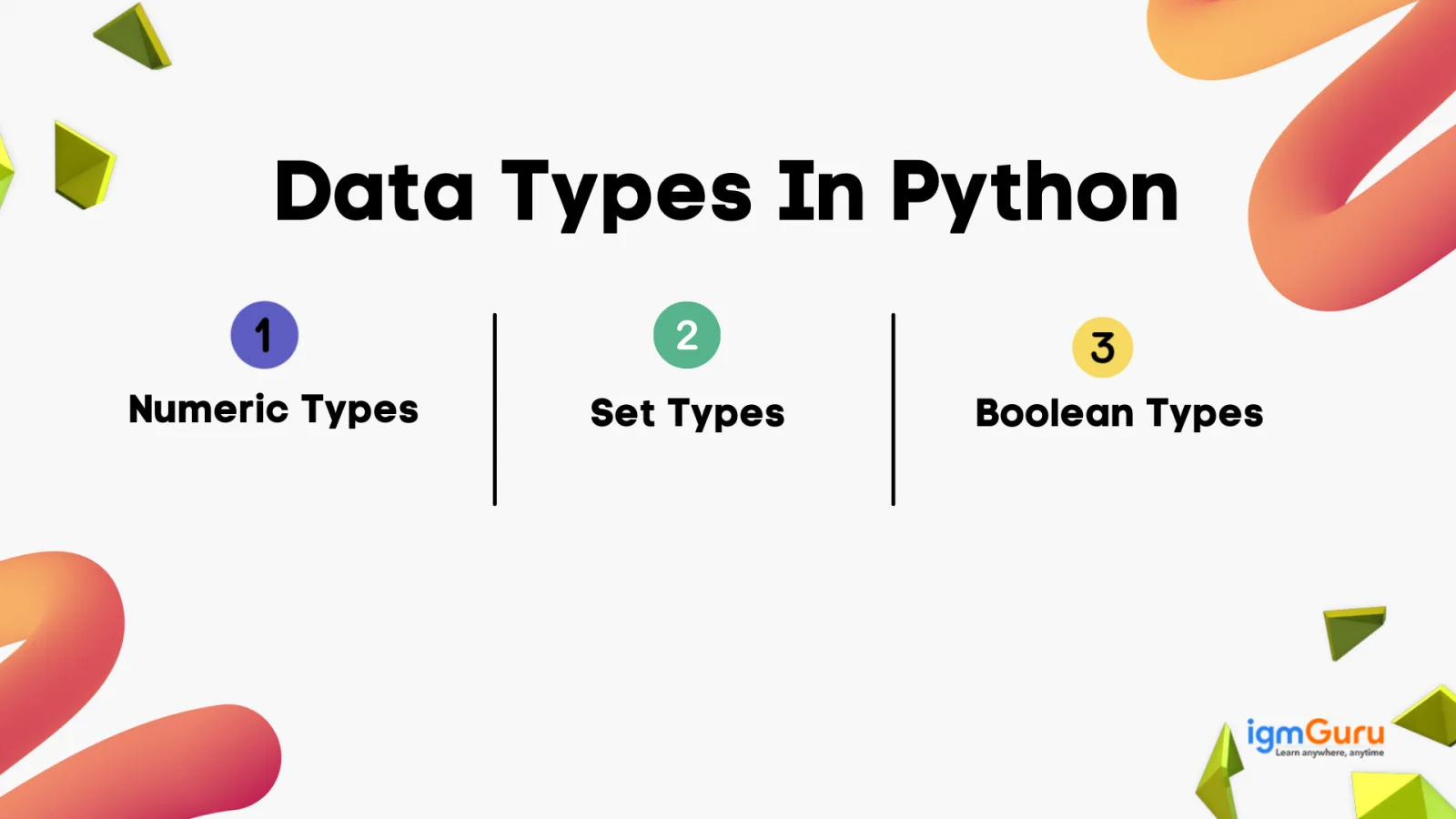
A data type in Python refers to a classification of certain specific kinds of data. There are different bases on which these data types are categorized. To become a professional in this field, it is important to understand the data types. A Python expert extensively uses them for better utilization.
This section of the blog digs a little deeper into a thorough understanding of these. Let's move forward to first explore 'what is a data type in Python'.
In Python, a data type pertains to a classification which is responsible for specifying the kind of value held by a variable. It also gives an implication of the operations that can easily be performed on these variables. These aspects make the fundamentals of programming. In fact, they are the ones that determine how the data is stored, manipulated and accessed within a program.
Since this programming language is dynamically typed, it eliminates the need to explicitly declare the type of the variable. It is the responsibility of the interpreter to infer the data type at the runtime. This is usually decided on the basis of the value that has been previously assigned to the variable.
It is very important to completely learn about the types of data types contained in Python. This is a much-important knowledge for anyone looking to succeed.
Want to know what is data types in Python? Dive into our ultimate guide to its types here!
A Python developer is a professional with the ability to utilize this amazing programming language to the fullest. Since this language is quite gigantic by nature, it might take a while to perfect it. That said, it is a language that can be learned by anyone who is interested in starting their programming journey with the best.
Here is a guide to become a Python developer and excel in one's career. This guide comprises the key steps that can be taken to get to the apex of this field.
Learning anything new means getting into the fundamentals of that field. There is hardly a different rule to get started with Python. The key for a strong beginning is understanding the language on a more basic level so as to install a strong foundation.
The first thing to do is begin by understanding its syntax and semantics. The basics in this case include studying its operators, functions, data types, control flow and variables. There are many ways to get started and basics can even be learned from the internet. These basics must be learned on a fool-proof ground. Thus, practicing is a good option.
Once the basics are covered, it's time to move to the core concepts. Gaining in-depth knowledge modules and packages is a great commencing point. Learn to organize the code into these by learning to leverage its standard library effectively.
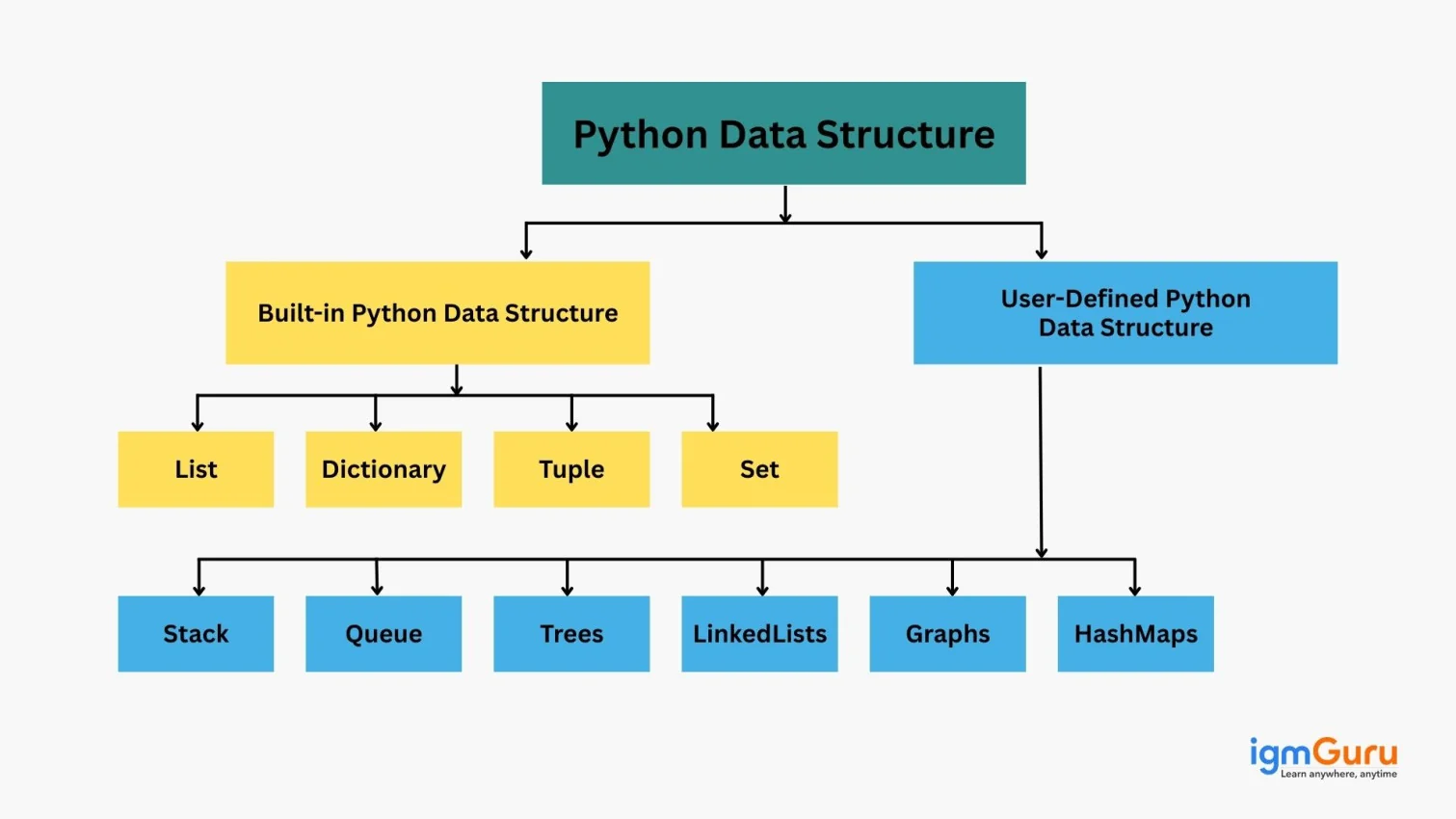
Since it supports object oriented programming, understanding encapsulation, classes, inheritance, objects, etc. is a must. This can be further perfected with practice. Learn about manipulating data structures, sets, dictionaries, tuples and lists.
Also Read- Python Tutorial
Gaining advanced level skills is the key to move things a notch ahead. Taking any career route includes going full-fledged into a learning mode for a while. There are plenty of advanced skills to gain here, including learning to read and write files. Get an understanding of the different file modes, along with knowledge of handling exceptions.
Debugging is an art that must be perfected. Learn to write a robust code and use the 're' module. This module is great for performing complex text processing and pattern matching.
As discussed above, this is an exceptional language which has gained such a high level of popularity because of its plenty of frameworks and libraries. For each of its applications, different tools have come to the limelight. For instance, Django and Flask are considered highly for web development. It also means learning the basics of CSS, JavaScript and HTML.
Matplotlib, NumPy, Scikit-Learn and Pandas are great for ML and data science. PyTorch and TensorFlow are among the most heavily used ones for deep learning. For scripting and automation, BeautifulSoup, PyAutoGUI and Selenium are among the top rated ones.
Explore our in-detailed guide on how to become Python developer here!
It is undoubtedly one of the most rapidly growing languages today. The kind of popularity this language enjoys is hardly ever even touched by any other programming language. The growing demand for Python professionals is a testament to the fact that they enjoy good salary packages.
There are plenty of tech jobs today that have found the use for this language in their working. Python developers, full stack developers, data scientists, software engineers and business analysts are a few of these professionals. There are many factors that ultimately sway a person's salary.
There are plenty of companies that have come around to hire these developers. Instagram, NASA, IBM and Google are a few of the top names that are concentrated on hiring these professionals.
On an average, a Python developer in the USA earns around $126k every year. As a beginner, it is very likely that they start at an approximate average salary of $105k every year. Having said that, experienced professionals often tend to earn a higher number. The average for experienced professionals is around $158k every year.
Geography is a huge basis for salary disparity in any job domain. It is no different in the case of a python developer. In India, the cost of living is calculated to be lesser than the cost of living in the USA. Consequently, the average income for the same position and experience level is lower in India than in most western countries.
On an average, a python developer in India earns around INR 9.10 LPA. As a beginner with no knowledge, this number is significantly less. However, experience level is another factor that influences the pay. Beginners in this field earn around INR4.30 LPA. For experienced professionals, however, the number can go to an approximate average of around INR11.50 LPA.
Related Article- Reasons Why Python is Good for AI and Machine Learning
There are very few job titles around the globe that enjoy fixed compensations. In a majority of cases, the salary earned by a person is influenced by plenty of factors. To give aspirants a better understanding of the top things that can sway how much a person earns, here is a list. This list comprises the top factors that play a big role in determining how much a person ultimately earns.
The number of years of experience one has plays a huge role in determining whether a person is paid less or more. Freshers are paid less by default. This is because they lack the experience required to be called a professional. These are the ones that have to be trained and that takes up a company's resources.
As a person gets more refined in terms of experience, their salary keeps on increasing. Senior developers are certainly paid the highest due to their extensive, concentrated experience.
Explore the top factors affecting the Salary of Python developer in this complete guide here!
Python is a huge field that cannot be learned or perfect overnight. One must religiously practice it to become a true professional in this field. This blog contains a wide span of knowledge related to this language. Almost every question that comes into the mind of an aspirant is already answered here. It is an attempt to help aspirants find everything from the get-go.
Course Schedule
| Course Name | Batch Type | Details |
| Python Training | Every Weekday | View Details |
| Python Training | Every Weekend | View Details |