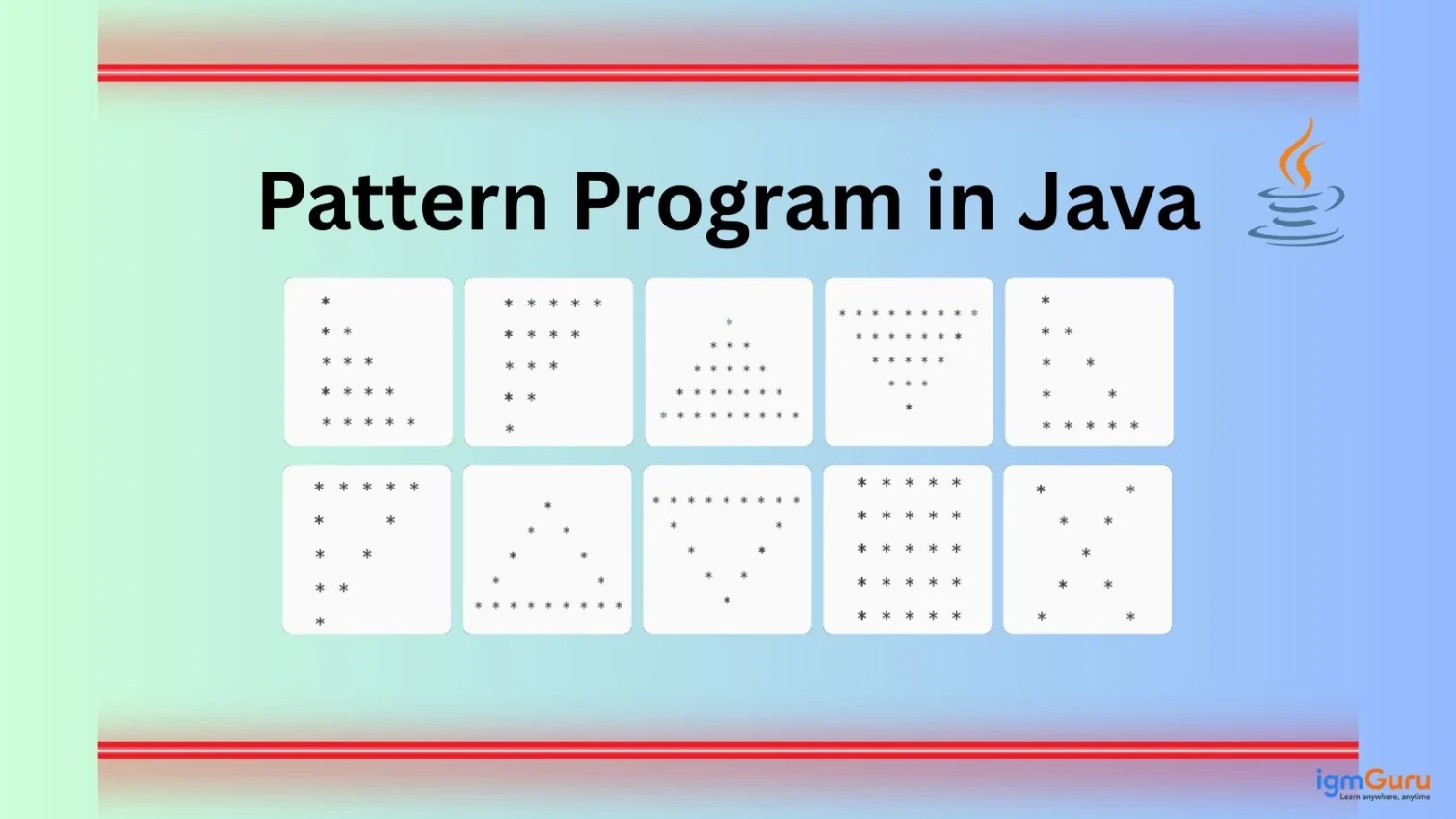
Want to become a Java Developer but don’t know where to start? Start with pattern programs in Java, where you practice printing shapes using symbols, numbers or letters. These programs help you understand various core concepts such as loops and logic in an easy, visual way.
Starting with pattern programs can be very beneficial for anyone who is learning the fundamentals of programming, particularly when dealing with loops and conditional statements. In this guide, I will explain to you how to create a pattern in Java with real-world examples. All examples in this guide work with Java 8 and above, including the latest LTS versions like Java 17 and Java 21. Let’s begin!
Pattern programs in Java are structured arrangements of characters, numbers, or symbols printed onto the console using nested loops. These problems are widely used in programming interviews to test logic building, control flow, and loop manipulation.
The development of pattern programs in Java is an effective means of learning the fundamental elements of programming logic. These programs involve specifically structured pattern printing using letters, numbers or symbols. There are multiple ways to print these patterns, like nested loops, conditional statements and flow control. Practicing pattern programs builds a strong logical foundation that helps learners move toward advanced programming concepts.
Now you know what is the importance of this pattern program and why it is useful for beginners who want to start their career as Java developers. Let’s explore some of the most important pattern programs in the Java programming language:
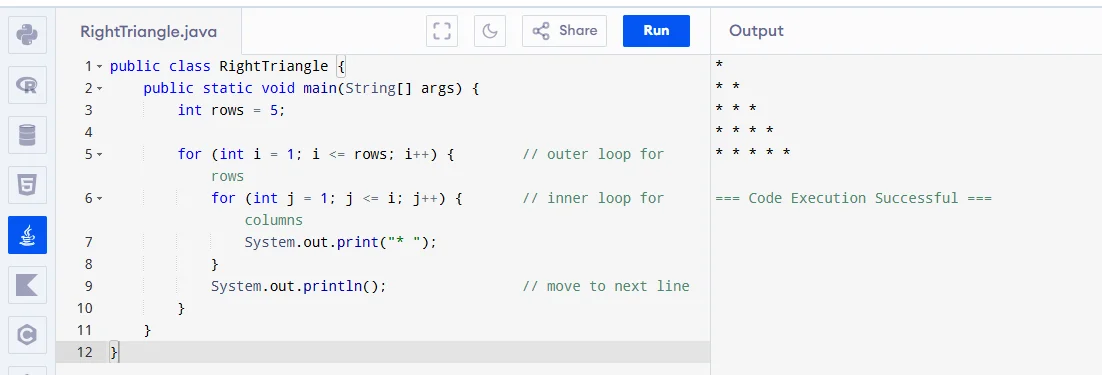
Star pattern programs help beginners to understand nested loops and how row and column logic work in Java.
|
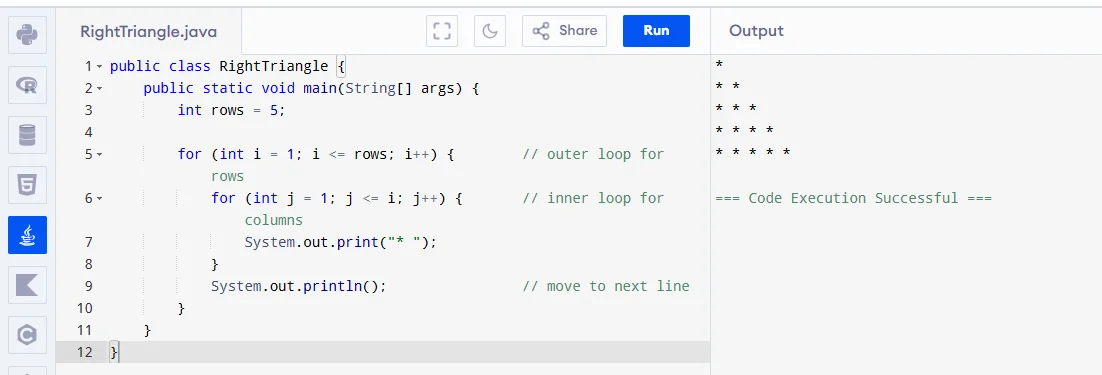
In real-world applications and coding interviews, the number of rows is usually taken from user input instead of being hardcoded. This makes the program dynamic and more practical.
|
|
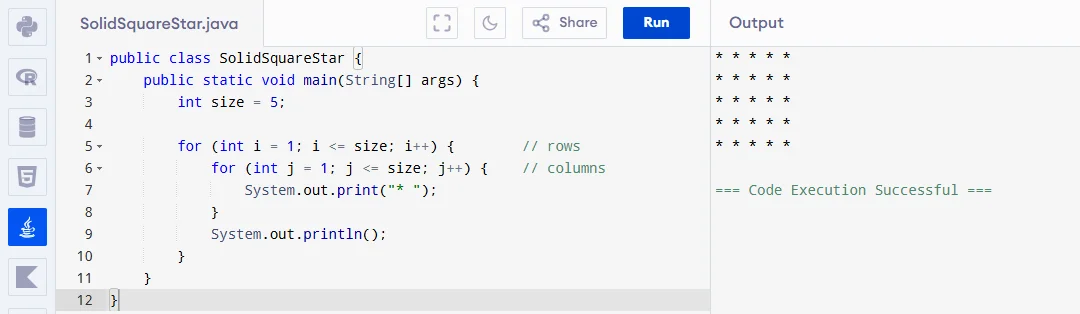
Square pattern programs demonstrate how loops behave when the number of rows and columns are equal. These patterns strengthen understanding of fixed size iterations.
|
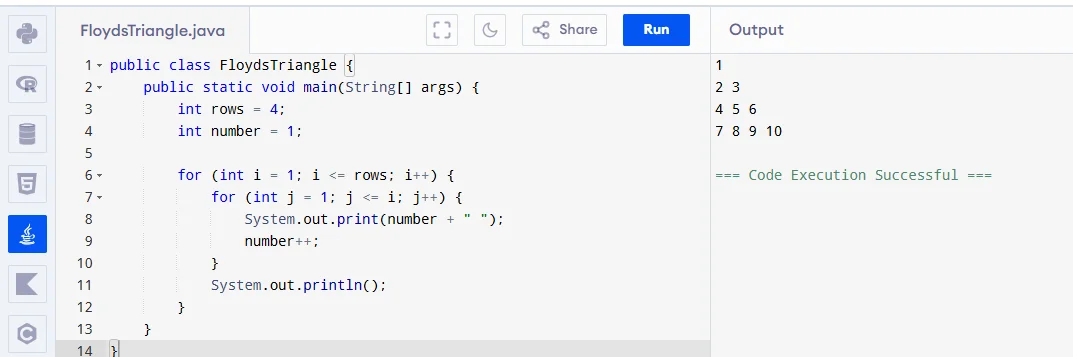
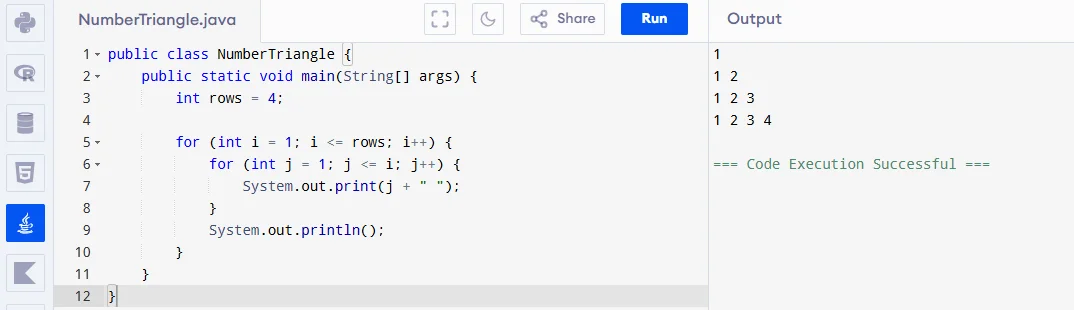
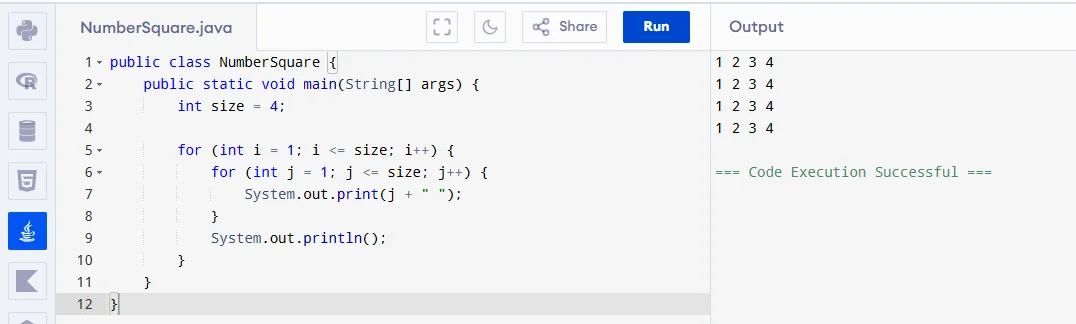
Number pattern programs focus on logical sequencing and nested loops. They help beginners understand how numbers change across rows and columns in Java.
|
|
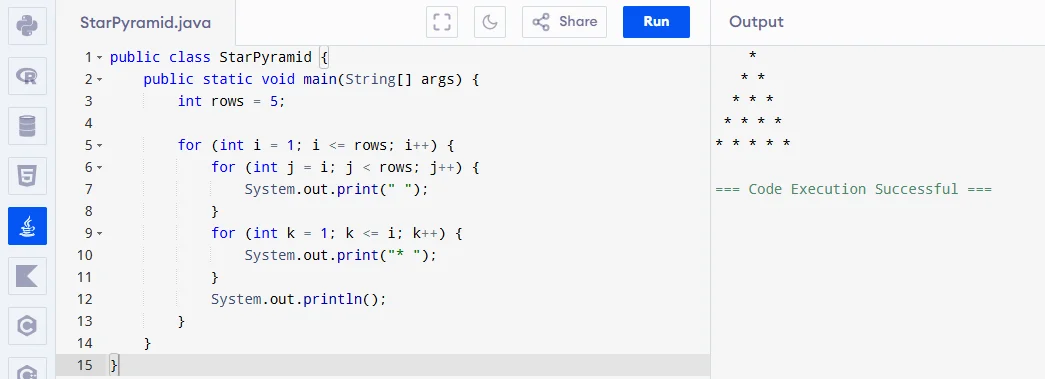
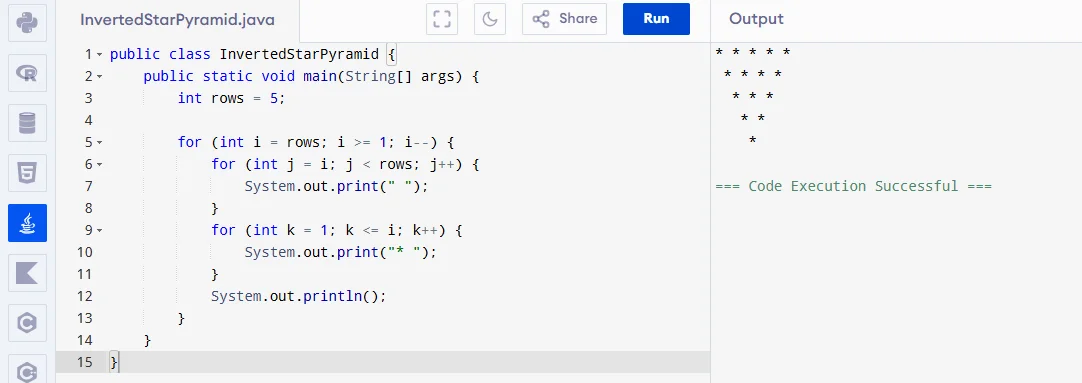
Pyramid patterns combine spaces and symbols to form symmetrical shapes. These patterns are commonly used to test understanding of alignment and loop control.
|
|
Alphabet pattern programs use characters and ASCII values to form structured designs. These patterns improve understanding of character manipulation and nested loops in Java.
|
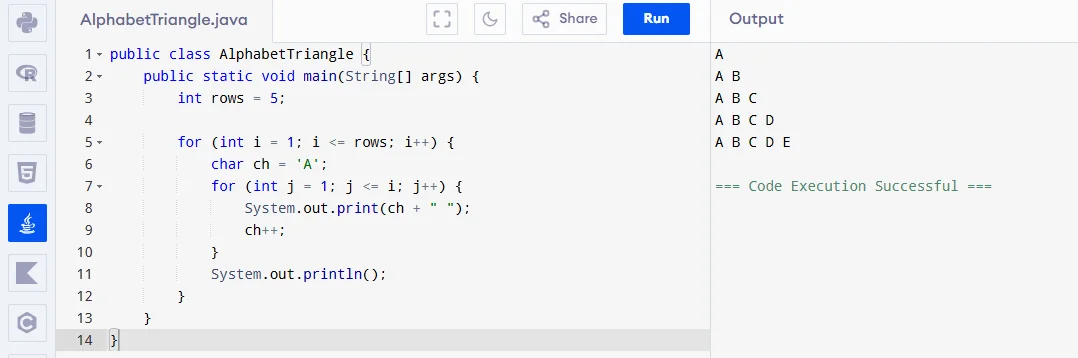

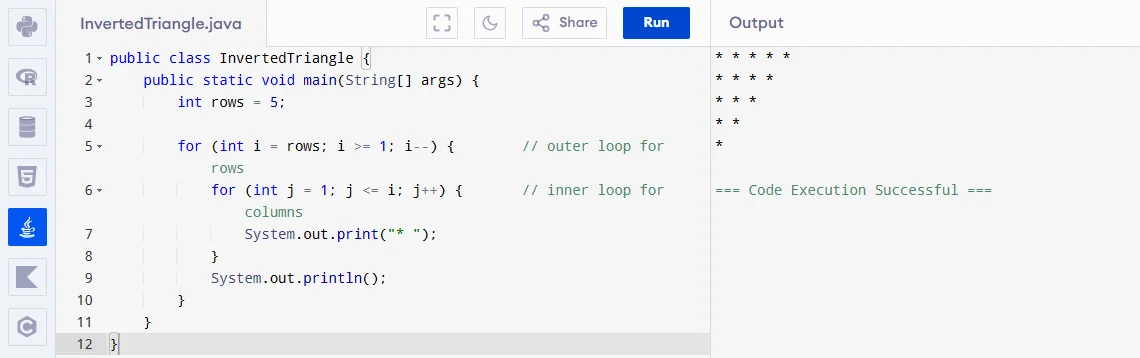
Triangle patterns are the most basic loop based programs. They clearly demonstrate how loop limits affect the shape and size of patterns.
|
Square pattern programs in Java help beginners to understand how loops work when rows and columns have the same fixed size.
|
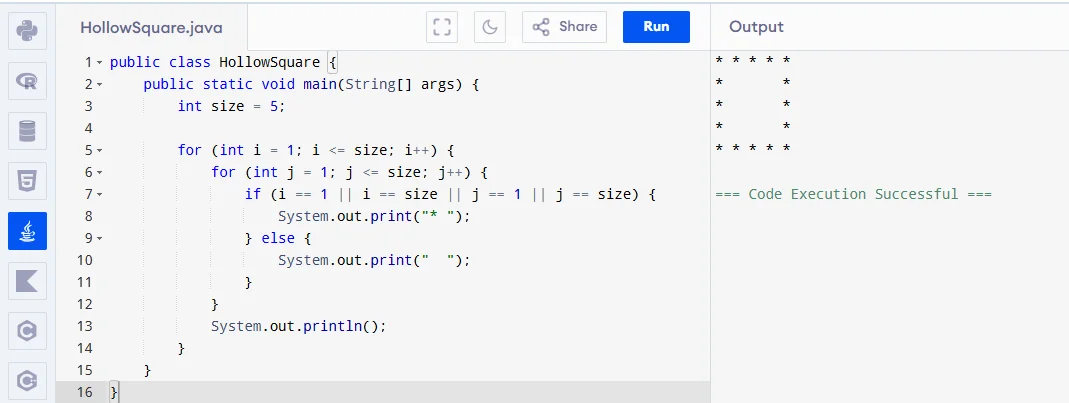
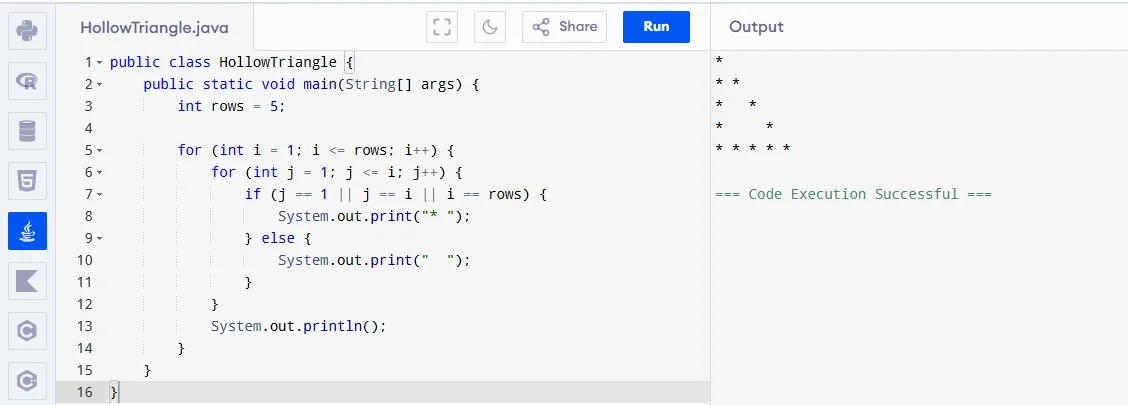
Hollow patterns print symbols only at the borders of a shape. They help learners to practice combining loops with if conditions.
|
|
|
Pattern programs may look simple, but they help developers build important programming skills used in real software development. These programs improve logical thinking, debugging ability and understanding of loop-based operations.
In the software industry, the same concepts used in pattern programs are applied in areas like data formatting, report generation, UI rendering, matrix operations and game development logic. Developers also use similar looping structures while working with grids, tables and structured data processing.
Many companies use pattern-based coding questions during technical screening rounds because they help interviewers evaluate problem-solving ability, loop understanding and coding structure.
Most pattern programs use nested loops. If the outer loop runs n times and the inner loop also runs up to n times, the overall time complexity becomes O(n²). Since these programs only use a few variables and do not allocate additional memory structures, the space complexity remains O(1).
Pattern programs are commonly asked in entry-level and fresher interviews to test logical thinking and loop control. Interviewers often modify basic triangle or square patterns into pyramid, diamond or hollow variations to evaluate problem-solving ability and understanding of nested loops.
In this guide, I have explained pattern programs in Java. I showed how to print stars, numbers and letters using basic loops and conditions. These patterns will help beginners understand logic step by step, think clearly and practice coding. They are a great starting point for learning Java and preparing for coding interviews.
Today, most companies use modern Java versions such as Java 17 and Java 21 for enterprise application development. While pattern programs use basic syntax, practicing them helps beginners become comfortable with the core programming logic still used in modern Java applications.
Pattern programs improve logical thinking and make it easier to understand nested loops and conditions.
Loops, nested loops, conditional statements and basic input/output operations are commonly used in Java pattern programs.
Yes, they are asked in interviews to test your problem solving and logical reasoning skills.
Star patterns like right triangles or squares are the easiest for beginners to start learning.
Explore Our Trending Articles-