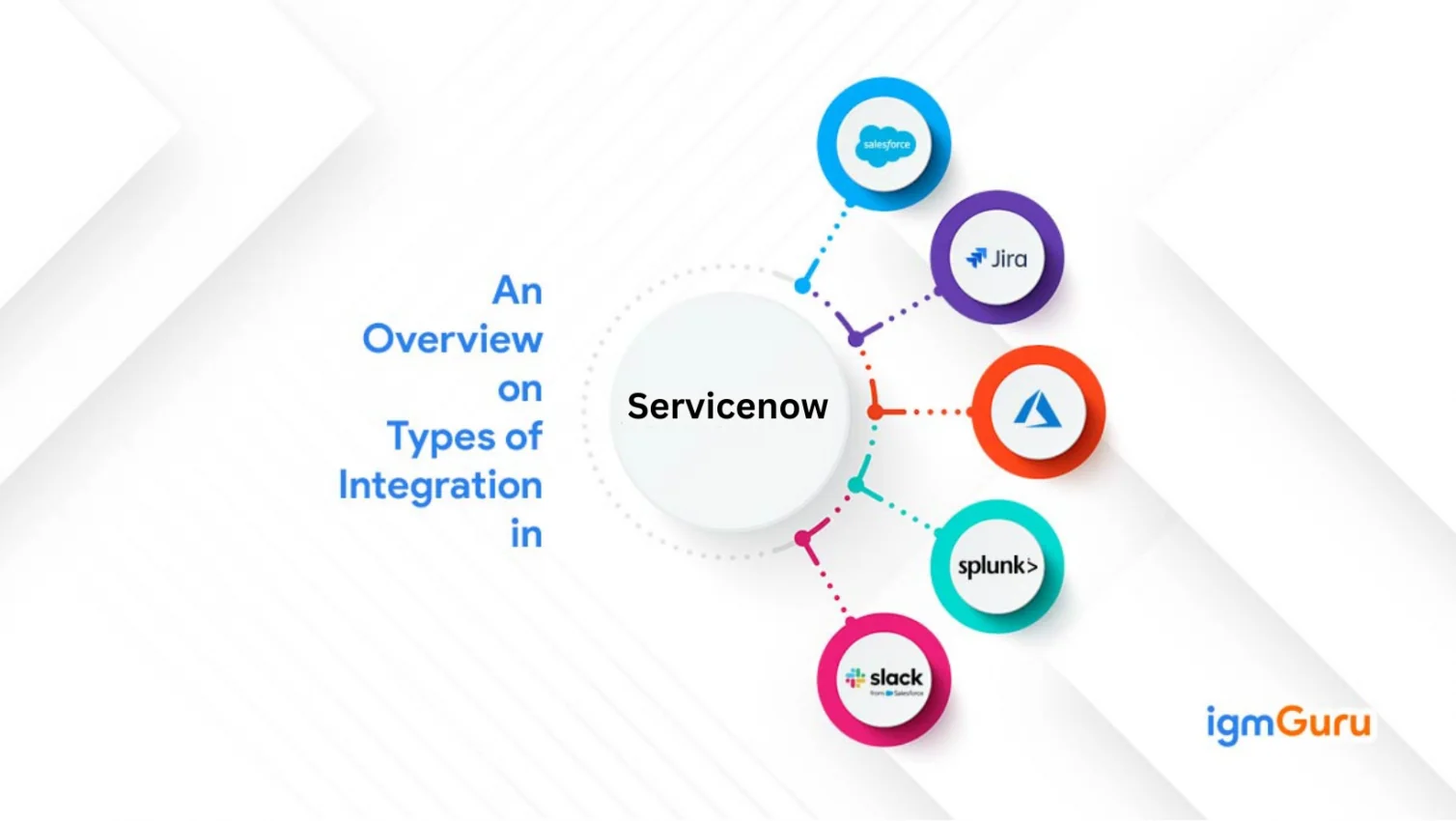
ServiceNow is a well-known and widely popular IT service management platform. It provides powerful integration capabilities that help in seamless connectivity with multiple applications, data sources and systems. Integrations are imperative for improving data accuracy, enhancing overall efficiency in IT operations and automating workflows. This is the reason it has become popular among businesses of all sizes. Well, this blog explores the various types of ServiceNow integrations, beginning with an answer to 'what is ServiceNow integration'.
It also covers the perks of picking ServiceNow integration for an organization. Let's get started to better understand this platform and process.
TL;DR
ServiceNow Integration is the process of connecting ServiceNow with external applications, systems, and data sources to enable seamless data exchange and workflow automation. This article explains why ServiceNow integrations are important, their benefits, common integrations with Jira, Azure, Splunk, Salesforce, and HRM systems, as well as the different types of integrations, including inbound, outbound, event-based, and middleware integrations. It belongs to the ServiceNow, IT Service Management (ITSM), and Enterprise Integration category
ServiceNow Integration pertains to the extremely important process of connecting ServiceNow with other applications, data sources and systems. This process is undertaken with the purpose of enabling seamless workflow automation and data exchange. Integrations facilitate ServiceNow to flawlessly interact with external tools such as cloud services, CRM platforms, ERP systems, and more. This helps organizations in streamlining processes, improving overall efficiency and enhancing data accuracy.
ServiceNow can easily push data to, pull data from or even synchronize with other systems. This is achieved via different integration methods, such as LDAP, MID Server and REST and SOAP APIs. All this creates a unified IT environment that offers support to better service delivery and decision-making.
Have you ever wondered why ServiceNow integration is important? Well, here are some reasons why it's so widely preferred and adopted by organizations.
Here is a brief about its integration apt for organizations having existing implementations.
Also Read- Salesforce vs ServiceNow
Integration with Jira helps in bridging the gap between agile development and IT service management (ITSM) teams. This integration facilitates seamless collaboration and communication between IT development and support. Consequently, it ensures that the issues tracked in ServiceNow are synchronized automatically with Jira to be resolved.
It pushes status updates, real-time data sharing and automatic ticket creation. All this reduces the risk of miscommunication while accelerating the incident resolution process. Linking Jira and ServiceNow helps organizations streamline workflows, ensure alignment between support and development teams and improve transparency. Thus, bettering productivity and customer satisfaction.
Also Read- Jira Tutorial
Integration with Azure enables organizations to effectively manage cloud resources via a single platform. This integration facilitates the automatic synchronization of Azure resources, like storage accounts and virtual machines, with ServiceNow's Configuration Management Database (CMDB). Automated incident management is also facilitated by curating ServiceNow tickets for Azure alerts, which ensures timely resolution of problems.
It supports de-provisioning and provisioning of resources straightaway from ServiceNow, improving control and efficiency. It ultimately enhances resource management, improves governance across the IT infrastructure and streamlines cloud operations.
Also Read- Top Azure Interview Questions
Integration with Splunk amalgamates powerful IT service management and advanced monitoring and analytics capabilities. This integration facilitates the automatic creation of incidents in ServiceNow as per alerts produced by Splunk. Thus, guaranteeing prompt action on critical problems.
It enables sharing Splunk's dashboards and real-time data within ServiceNow. This provides valuable insights to IT teams for diagnosing and resolving issues rapidly. Bringing Splunk's data analytics and ServiceNow's incident management together helps organizations improve their incident response times, ensure better overall IT service performance and enhance system visibility.
Also Read- Top Splunk Interview Questions
Integration with Salesforce improves the synergy between IT operations and customer service. It facilitates seamless data exchange between ServiceNow and Salesforce. Thus, helping customer service agents using Salesforce in accessing IT support data directly from ServiceNow.
It supports automatically creates incidents in ServiceNow in the event that cases are logged in Salesforce. This guarantees that all technical issues are addressed without any delay. Connecting these systems ensures that organizations enhance customer satisfaction via faster issue resolution and achieve better communication between different departments.
Integration of Human Resource Management systems streamlines and automates HR processes, right from onboarding to delivering employee services. It enables HR teams to track service delivery, automate workflows (like onboarding, offboarding, etc.) and manage employee requests within ServiceNow.
It promises that HR-related data (like benefits information and employee records) is always synchronized between ServiceNow and the HRM system. Integrating these systems helps organizations in improving the accuracy and efficiency of HR operations. Additionally, it improves employee experience and guarantees compliance with organizational procedures and policies.
Related Article- ServiceNow Interview Questions
There are many different types of ServiceNow integrations to connect with applications, data sources and external systems. The main types are-
ServiceNow integrations are imperative for the optimization of IT service management. Seamless workflow automation and data exchange are kick-started across different systems. Learning about the various types of integration in ServiceNow helps organizations in creating an efficient and connected IT environment. Businesses can leverage these integrations to boost collaboration, deliver better services and enhance operational efficiency.
Ans. ServiceNow Integration Hub is a tool that enables automated workflows by integrating ServiceNow with external systems and applications through reusable spokes and APIs.
Ans. The 6 types of APIs in ServiceNow are-
ServiceNow communicates with external systems using REST and SOAP APIs, pre-built IntegrationHub Spokes, and message brokers.