Big data engineering is transforming how industries make decisions, forecast trends, and uncover business insights. With this shift, roles like big data engineer and data scientist are ranking among the fastest-growing tech careers. The World Economic Forum even lists big data engineers as one of the top emerging professions.
Having worked closely with data-driven technologies and guiding learners through complex tech domains, I've seen firsthand how impactful this career path can be. In this guide, I break down the roadmap on how to become a big data engineer clearly- covering responsibilities, required skills, salary scope, and current industry trends. Let's start with a quick overview of the role.
Big data engineering is the field of managing and processing large, complex datasets to extract meaningful insights. It involves designing, building and maintaining the infrastructure and tools required for collecting, storing, transforming and analyzing data at scale. Big data engineers build different systems that can handle the volume, velocity and variety of data that modern organizations generate.
It is a vast field and involves various concepts like data pipelines, data lakes, data warehouses, batch and stream processing, ETL, etc. The more you dive into the field, the more you will discover. All these concepts are essential to learn for a big data specialist. Let's discuss who these professionals are.
Big data engineers design, build, test, and maintain large-scale data processing systems that work with massive datasets. They cleanse, transform, and organize data so downstream users like data scientists and business analysts can derive meaningful insights.
Their major role also includes building and managing the organization's big data infrastructure, ensuring efficient storage, processing, and data management workflows.
These two roles are often confused with one another, as both are important positions in an advanced analytics team. Here is the table that differentiates these two roles.
| Aspect | Big Data Engineer | Data Scientist |
| Primary Role | Designs, builds, and maintains large-scale data systems | Performs advanced analysis and modeling on data |
| Focus Area | Data pipelines, storage, processing, optimization | Machine learning, statistical analysis, insights |
| Key Skills | SQL, NoSQL, cloud, architecture, frameworks, MySQL | Statistics, ML algorithms, Python/R, data modeling |
| Core Objective | Ensure clean, reliable, well-structured data | Extract insights and predictions from data |
| Collaboration | Supplies organized data to data scientists | Uses prepared data for analysis |
Related Article- What Is AWS Big Data?
Understanding what are the job responsibilities of a big data engineer plays a major role in understanding how to become a big data engineer. This list of responsibilities is only a portion of the things one must learn.
There are many aspects in the process for how to become a big data engineer. The aspirant has to clear many skills to unlock the true potential related to this field. Some important skills for this job role are -
These are the fundamental concepts and pertain to instructions for a sequence of actions performed in a set order. These are useful irrespective of the programming language used. Algorithms find, sort, delete or insert items in a database.
This is among the most popular programming languages across the globe for big data. It generates queries from a client program for storing and editing data on database servers.
Spark, Kafka, and Apache Hadoop are popular big data tools for making data storage and management easier. Hadoop comes up with solutions for problems associated with gigantic data amounts. Spark's interface for programming clusters is great.
These are software solutions for building pathways for data flow. They eliminate different manual steps from the data transfer process. These are implemented for transferring data to applications as well.
Data handling needs a systematic order for easy access. Data structures manage the data better by organizing it well. Different data structures include binary tree, array and matrix, graph.
Python is preferred for its versatility and ease of use. This is a must-have skill for data enthusiasts. Java and Scala are equally important skills for these engineers since tools like Apache Spark, Hadoop, HBase, Apache Kafka and others use these languages.
Data is stored in independently operated clusters. Good knowledge of data clusters as well as their systems is needed to come up with the right solutions.
Data modeling skills are important for understanding the place to normalize (or denormalize) data in the warehouse. It answers questions related to structuring tables and partitions, and retrieving certain attributes.
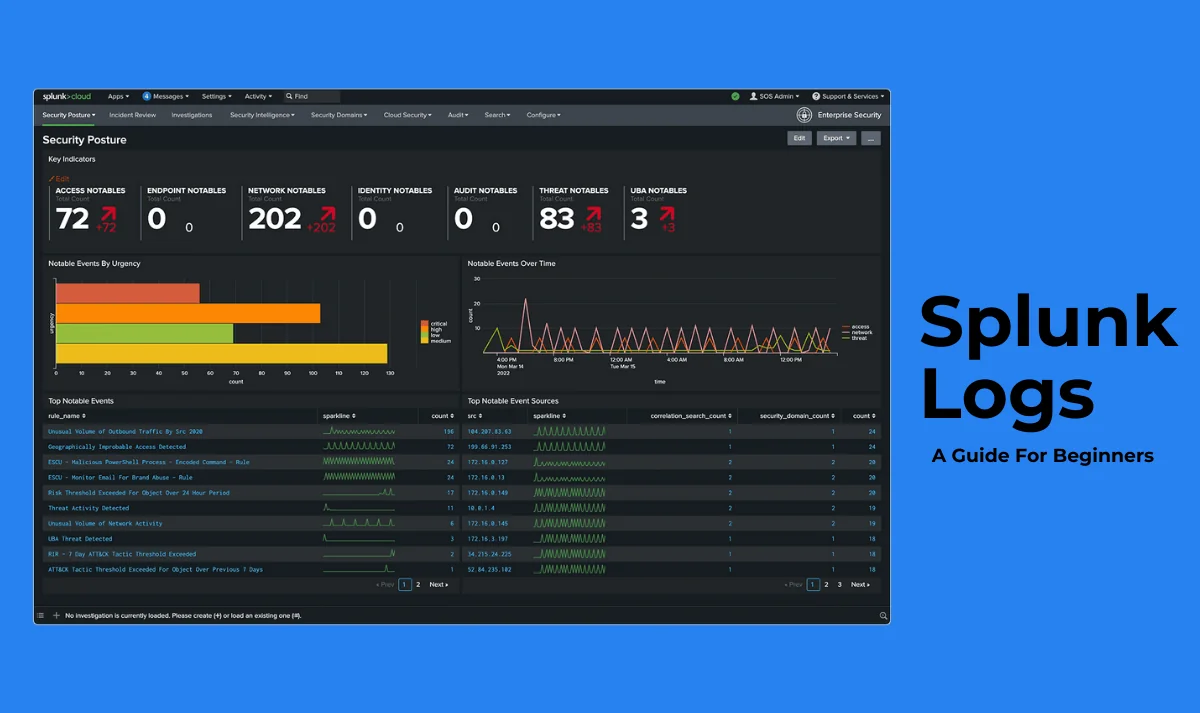
Related Article- Splunk Tutorial
Here is a quick overview to help you understand the Big Data Engineer role at a glance.
| Attribute | Summary |
| Average Time to Learn | 1-2 years |
| Average Salary | ₹7.4 LPA (India), $183k (US) |
| Must-Know Skills | SQL, Java/Python, Hadoop, Spark |
| Who They Work With | Data Scientists, Analysts, Architects |
The roadmap to becoming a big data engineer is quite straightforward with clear steps to follow. Aspirants have to understand a few important learning points and everything else will fall right into place.
A strong academic foundation is the first step towards a career in big data engineering. While specific degree requirements can vary, a bachelor's degree in a relevant field can provide you necessary knowledge and analytical skills. You can go for computer science, data science, information technology, or any other relevant degree. The goal is to gain essential knowledge in algorithms, data structures, database management and statistical analysis. It works as a crucial building block for understanding and working with big data technologies.
Proficiency in one or more programming languages is a fundamental requirement for a big data engineer. These languages are used to manipulate, process and analyze large datasets. Acquiring a strong understanding of these languages gives you the ability to write efficient and scalable code. Several languages are particularly relevant in big data engineering. Some popular choices are Python, Scala and Java.
Big data engineering also requires a solid understanding of database systems. This includes both traditional relational databases and non-relational databases.
These are fundamental for structured data storage and retrieval. These include PostgreSQL, MySQL, etc.
These are designed to handle large volumes of unstructured or semi-structured data with high scalability and availability. Familiarity with these databases and their specific use cases is increasingly vital in this field.
The next step is to dive into the core technologies that enable the processing and analysis of massive datasets. You can master Apache Hadoop, a foundational element. It encompasses HDFS (Hadoop Distributed File System) for storage and YARN (Yet Another Resource Negotiator) for resource management. Apache Spark has emerged as a powerful alternative and complement to Hadoop. It offers faster in-memory processing capabilities for various big data tasks, including:
Data warehousing is another important aspect of this field. It involves designing and implementing systems for storing and analyzing structured data from multiple sources. It is used to support business intelligence and reporting. We also know this process as ETL (Extract, Transform, Load). This involves extracting data from different sources, transforming it into a consistent format and loading it into a data warehouse.
Common tools used for the ETL process are:
Cloud platforms provide many services for big data storage, processing, and analytics. It is important to be familiar with these platforms due to their scalability, cost-effectiveness and the managed services they provide. Here is an overview of the top cloud platforms with their services:
| Platforms | Services |
| Amazon Web Services (AWS) | - Amazon S3 (Simple Storage Service) - Amazon EMR (Elastic MapReduce) - AWS Glue - Amazon Redshift - Amazon Athena |
| Microsoft Azure | - Azure Blob Storage - Azure Data Lake Storage - Azure Synapse Analytics - Azure Databricks - Azure HDInsight |
| Google Cloud Platform (GCP) | - Google Cloud Storage - BigQuery - Dataproc - Dataflow - Dataprep |
Data pipelines efficiently move and transform data from various sources to target systems for analysis. Therefore, it is essential to understand how to design, build and manage efficient data pipelines. This involves understanding data integration patterns, data quality management, pipeline monitoring and optimization. You can also learn workflow management tools like Apache Airflow or Luigi for the orchestration of complex data pipelines.
The certification is not always mandatory but obtaining it can be very beneficial to your career. It validates your skills in the relevant area, which improves your credibility and the chances of getting hired. Some most valuable certifications in this field are:
After completing your learning, the first thing you should do is build a strong portfolio. The experience will be the key aspect here. While experience comes from working in a company, there are many other options too. You can join internships, work on real-world projects, or even build your own project. It will be a great addition to your portfolio.
Related- Hadoop Tutorial For Beginners
Here is the quick overview of big data engineer salary.
| Experience Level | Salary in USA | Salary in India |
| Entry-level/Freshers | $151,131/year | ₹7.3 Lakhs/year |
| Mid-Level | $170,223/year | ₹12.9 Lakhs/year |
| Experienced Professional | $227,000/year | ₹23.7 Lakhs/year |
Is a career in big data engineering safe? Well, its integral role across a wide range of modern technologies certainly points towards a secure future. To gain a clearer perspective, let's explore the elements shaping its future:
Companies are increasingly adopting this technology to perform their AI and ML-related operations. It gives the capability of streamlining the analysis of humongous datasets with ease. This helps them to achieve improved predictive analysis, smarter business decisions, innovative solutions and personalized customer experience.
Processes like ELT are no longer in demand these days. The organization now seeks real-time insights to update its analytics instantly and streamline its business processes. There are various platforms to achieve it, including Kafka, Spark Streaming and Flink.
The advancement of 5G and edge computing has made it possible to collect and process data at very low latency. Therefore, data engineers must require low-latency pipelines, for instance, sensor data, clickstreams or log feeds.
There are many considerations one must consider when dealing with business information. This may involve sensitive information that may cause critical loss to the business in case of any loss or malicious activity. This is where big data engineers come to implement their skills and knowledge to implement best security practices.
DevOps is a robust set of practices that blurs the line between software engineering and data engineering. Many organizations adopt this technology to automate and streamline their operations. This involves version control for data code, continuous delivery of data infrastructure, automated testing of data pipelines and more.
There is too much to know about how to become a big data engineer. It begins by learning about who they are and what their responsibilities entail. The next thing is to understand the learning steps and skills that make one capable of being in this field. Understand the future scope and salary bracket for more drive in this direction.
Explore Our Trending Articles:
An average individual takes four to five years to become a big data engineer. They are initially posted as jr. data engineers and then get promoted with skill development.
Big data engineering does require programming knowledge in C++, Java or Python.
Big data engineers get an average salary of INR 7,43,500 per annum in India and $183,000 in the USA.
Course Schedule
| Course Name | Batch Type | Details |
| Big Data Courses | Every Weekday | View Details |
| Big Data Courses | Every Weekend | View Details |